
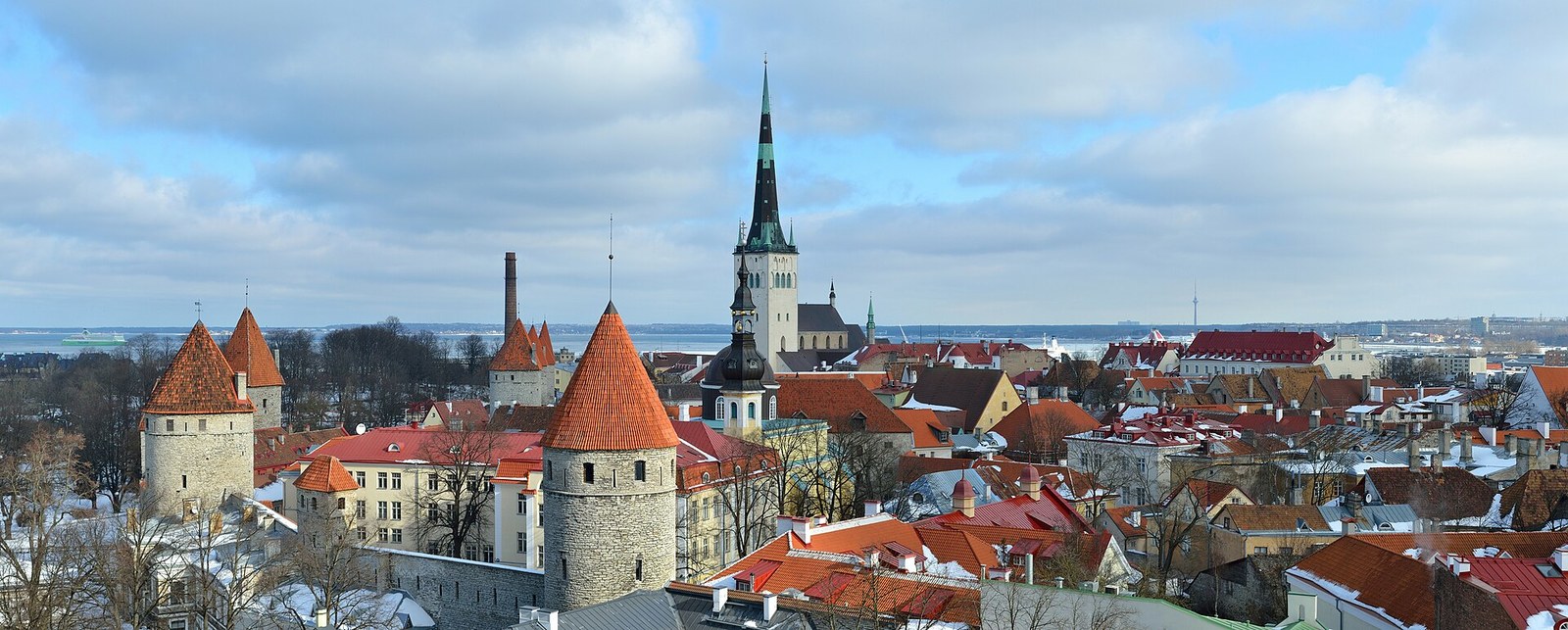
🇪🇪 Estonia, the northern gate of the Baltics
Estonia is where a Baltic trip most naturally begins — or ends. Tallinn's walled Old Town is the arrival, the ferry across the Gulf of Finland makes Helsinki a genuine extension of the same trip, and the railway running south through Tartu and Valga is the first leg of the overland chain down through Latvia to Lithuania. The Estonian problem is rarely distance. It is layers: which of the three gateways — airport tram, Baltic Station or ferry terminal — your plan actually uses, why the famous "free transport" does not apply to you, and why the train south and the bus south are both real answers, on different days.
The lay of the land — one capital, three directions
Almost every Estonian itinerary is built from the same pieces. Tallinn holds the airport, the railway station and the ferry port within a short arc of the Old Town, and the country fans out from there: north across the water to Helsinki, south by rail and road toward Tartu, Riga and Vilnius, and east along the coast to the bogs and manors of Lahemaa.
| Layer | What it is | How booking works | Watch out |
|---|---|---|---|
| Elron trains | The national passenger railway — state-owned Elron — radiating from Tallinn's Baltic Station toward Tartu and Valga, toward Narva, and across the Tallinn commuter belt | One official home: elron.ee and the Elron app, plus station offices at Tallinn and Tartu and ticket machines on board | A standard ticket does not guarantee a seat — and the cross-border service south runs once a day with a change at Valga, so it is planned, not improvised |
| Ferries to Helsinki | The busiest layer of all: fast ferries across the Gulf of Finland, with Tallink's shuttle ships as the backbone and other operators sailing the same water | Each operator sells its own crossings; Tallink sails from Terminal D in Tallinn, the others from the Terminal A side — the terminal is part of the ticket | "The ferry" is not one product: ship, terminal and crossing time all differ by operator, and a Helsinki day trip lives or dies on the last sailing back |
| City transport & Ühiskaart | Tallinn's buses, trolleybuses and trams on one ticket, paid with the reloadable Ühiskaart smartcard, a contactless bank card or a QR ticket | Cards and tickets come from kiosks, sales points and the pilet.ee channels; you validate on board, every time | Free travel is a residents' scheme, not a visitor perk — and drivers do not sell tickets, so boarding without a way to pay is boarding without a ticket |
| Long-distance buses | The road layer that completes the Baltic map — coaches from Tallinn's bus station to Tartu and, above all, south to Riga and onward to Vilnius | Sold by the operators from the bus station beside the Old Town's eastern edge | On the Tallinn–Riga leg the bus is not the train's backup; for many timetables it is the more frequent product, and the honest comparison is departure against departure |
The railway — Elron and the road south
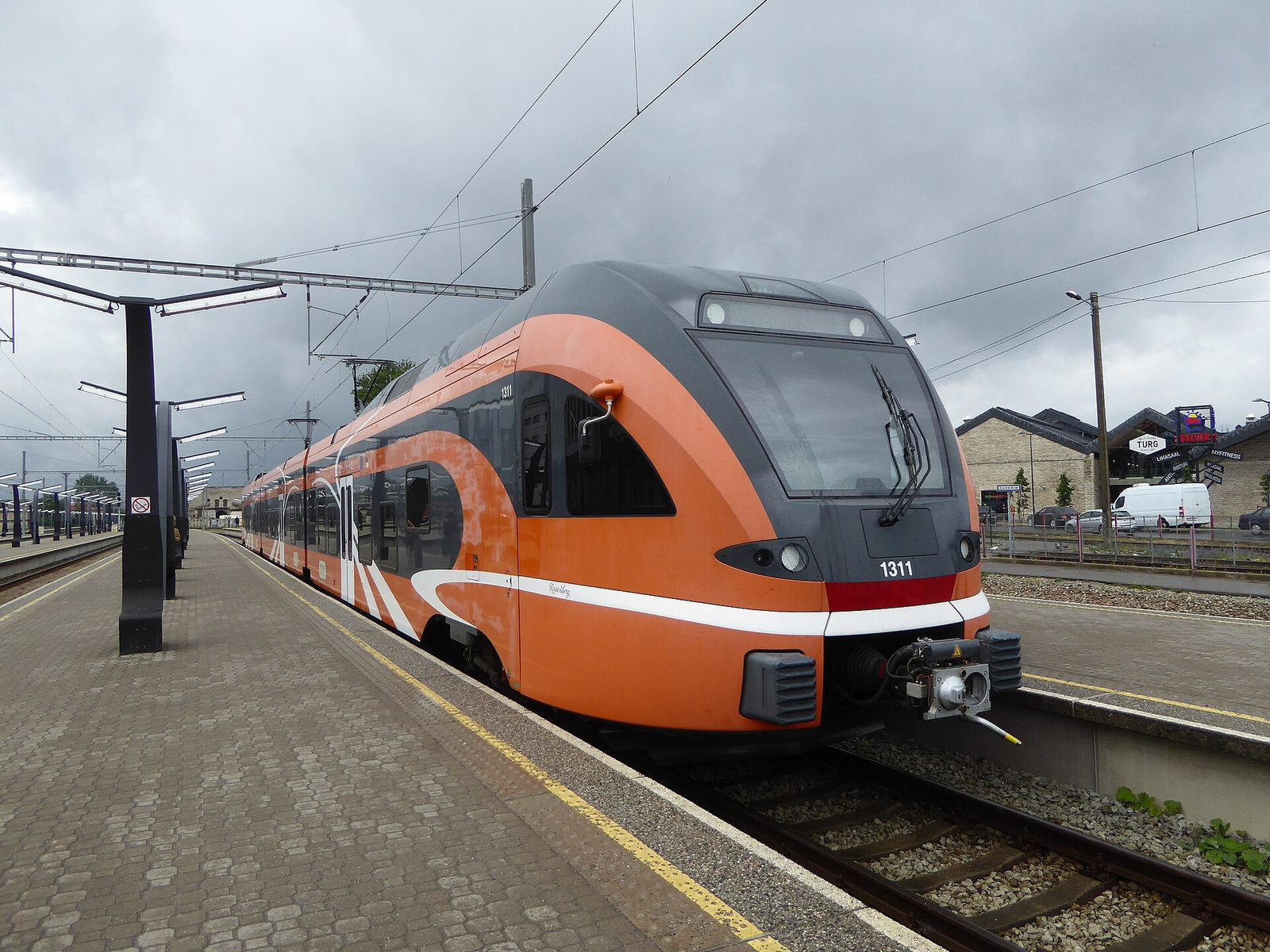
Elron — Estonian Railways National rail — one operator, one hub
Strengths
- One operator and one official booking home for the whole country: the timetable logic you learn for the Tartu line is the logic of every line out of Baltic Station
- The southbound line is also the Baltic chain: the same train that serves Tartu continues toward Valga, where the cross-border connection hands you onward toward Riga and Vilnius
- Tartu is a genuine second city on the line — a university town worth its own night, not merely a stop the train passes through
Watch out
- The cross-border connection is a once-a-day shape with a change at Valga: miss the rhythm and the day reorganises itself around buses, so hold the connection in the operator's journey planner, not in a screenshot
- Works on the Riga–Vilnius section keep moving the onward times — the operator's own warning, and the reason this page prints no timetable for that leg
- A standard-class ticket is a right to travel, not a seat: on busy departures the difference matters, and the first-class product is the seat guarantee
Best for: Tartu, the domestic map, and the deliberate, scenic version of the journey south — with the coach kept in the plan as the flexible alternative.
See the Elron cross-border connection →Official siteRail passes (Eurail) Pass — read the structure first
Strengths
- One pass across many trains and borders — the natural shape for a long European rail trip that reaches the Baltics at one end of it
- Sold by Eurail itself; we link the official site and label it as such
Watch out
- The Baltics are where passes go to be tested: a small network, a once-a-day cross-border link and a strong coach alternative mean the pass has to earn its place against ordinary singles and bus tickets
- We have no affiliate arrangement here and do not summarise pass prices or terms we have not verified — the official terms are the comparison
Best for: trips where Estonia is the far end of a much larger rail journey — judge it on the whole route, never on the Baltic leg alone.
Tallinn — the Old Town is the country in miniature
Tallinn's Old Town is one of the best-preserved medieval trading cities in northern Europe, a UNESCO World Heritage site since 1997, and it still does the work of a living capital: government sits on its hill, and its lower town is a working tangle of churches, guild halls, cafés and museums inside the old walls.
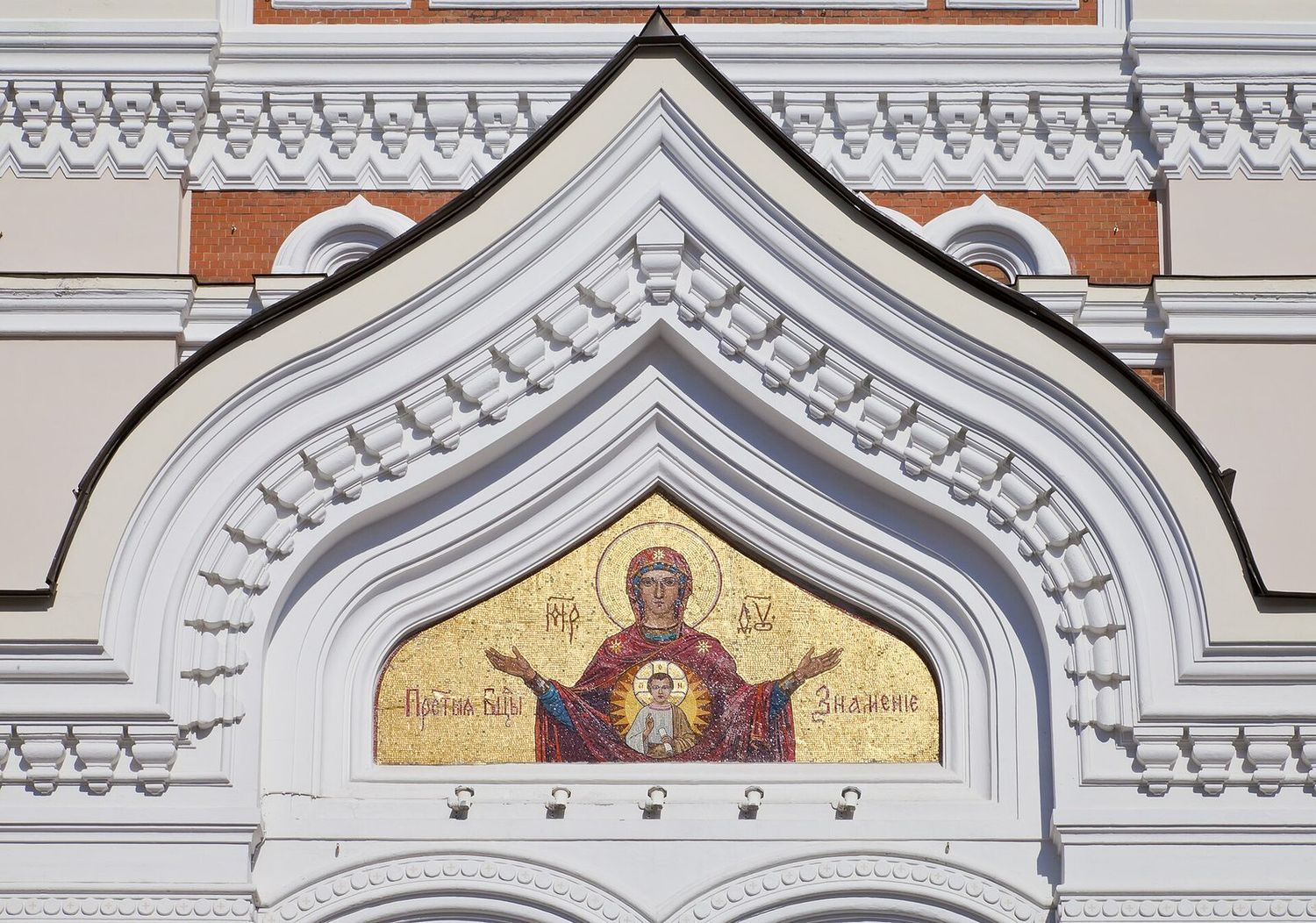
Tallinn Old Town & Toompea Base — the capital & the hub
Strengths
- The Old Town reads in two clear halves: Toompea, the upper town of castle, cathedral and Alexander Nevsky Cathedral, with the Kohtuotsa and Patkuli viewing platforms over the rooftops — and the lower town of Town Hall Square, merchant houses and church spires inside the walls
- Everything a first day needs is walkable: the walls and the Kiek in de Kök tower, St Olaf's Church, Fat Margaret at the sea gate, and the lanes of the old Hanseatic merchants in between
- As a base it is unusually forgiving: the station, the port and the airport tram all sit at its edges, so arrival and departure days lose almost no time to logistics
Watch out
- The Old Town's compactness hides its hills and cobbles: Toompea is a climb, the lanes are stone, and the viewing platforms reward those who pace the day rather than stack it
- Cruise and ferry peaks fill the lower town at midday in season — the early morning and the evening, when the day visitors sail away, are the Old Town at its best
Best for: the base of the whole Estonian trip, and a first and last day that need no transport decisions at all.
See Visit Tallinn →Official site See the UNESCO walk on Visit Estonia →Official siteThe Helsinki ferry — the second capital on the same trip
No other European capital pair lives this close across the water. The Gulf of Finland crossing turns Helsinki into Tallinn's natural twin: close enough for a day trip, different enough to feel like a second country on the same ticket — which, in planning terms, is exactly what it is.
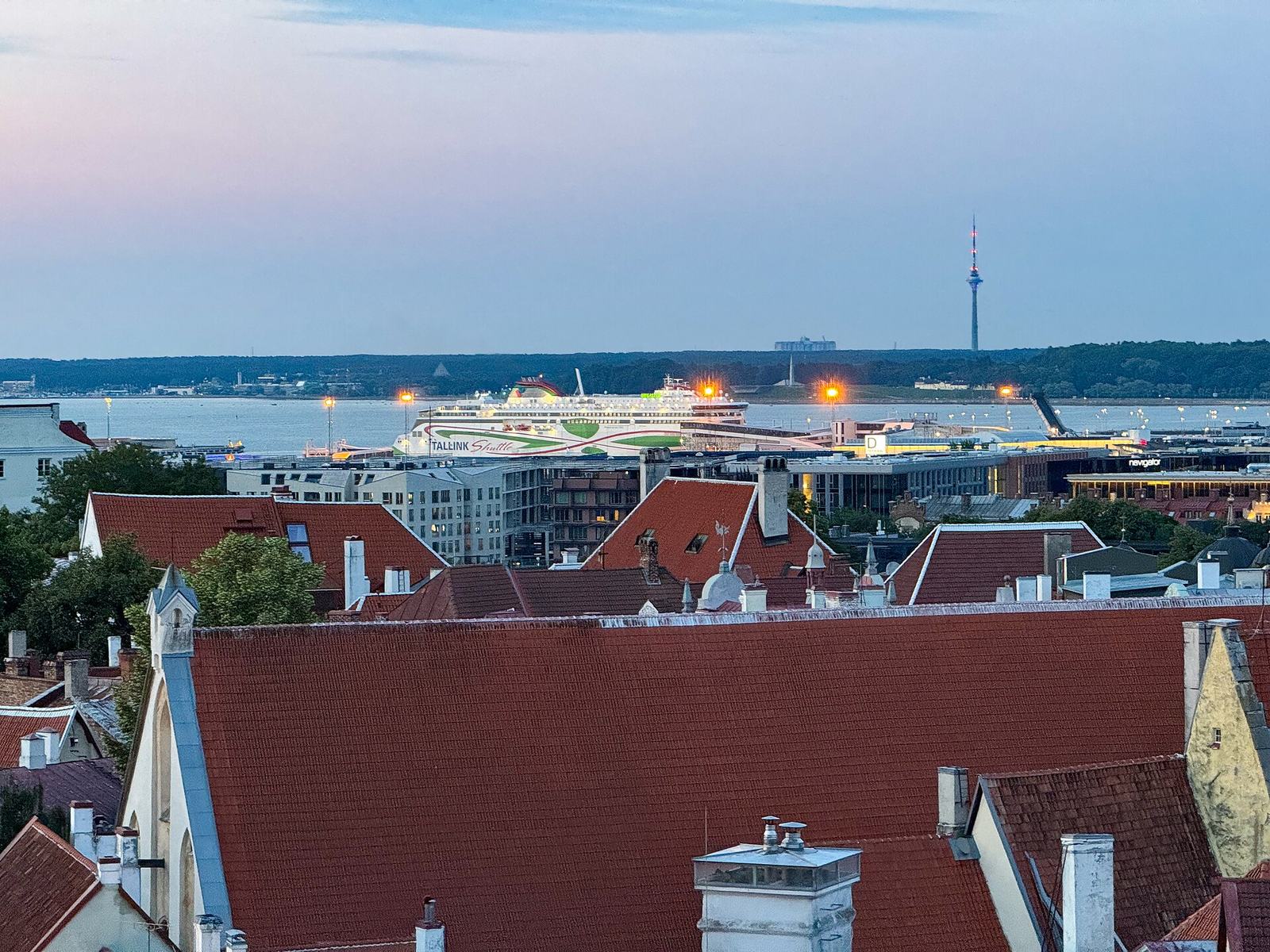
Tallink Silja — the Helsinki shuttle Ferry — the fast-ferry backbone
Strengths
- The fast ferries MyStar and Megastar are the route's backbone: a crossing of about two hours, sailed several times a day, on ships built for this shuttle and little else
- Tallink's Tallinn home is Terminal D, a short walk or tram ride from the Old Town — the city-centre-to-city-centre shape is the product, and it is genuinely hard to beat by air
- Check-in runs online and in the operator's app, and the same operator's wider network reaches Stockholm and Turku if the Baltic trip grows sails
Watch out
- Tallink is not the only flag on this water: other operators sail from the Terminal A side of the port, so "the Tallinn ferry terminal" is a question, not a place — confirm yours before the taxi, not at the kerb
- The cruise-ferry sailing in the pattern is a slower, overnight-flavoured product than the fast shuttles; booking "a Tallink ferry" without checking which ship is booking two different days
- A Helsinki day trip is bounded by the last sailing home: build the day backwards from it, and keep a sailing of margin — the Gulf does not accept excuses
Best for: the Helsinki day trip or the two-capital trip — and for arriving in Estonia the way the Baltic itself suggests, by sea.
Lahemaa — bogs, bays and manor houses
East of Tallinn the coast opens into Lahemaa National Park — established in 1971 as Estonia's first and largest national park — a landscape of indented bays, erratic boulders, pine forest, raised bogs and the manor houses of a vanished landed world. It is the Estonian countryside in its most concentrated, capital-friendly form.
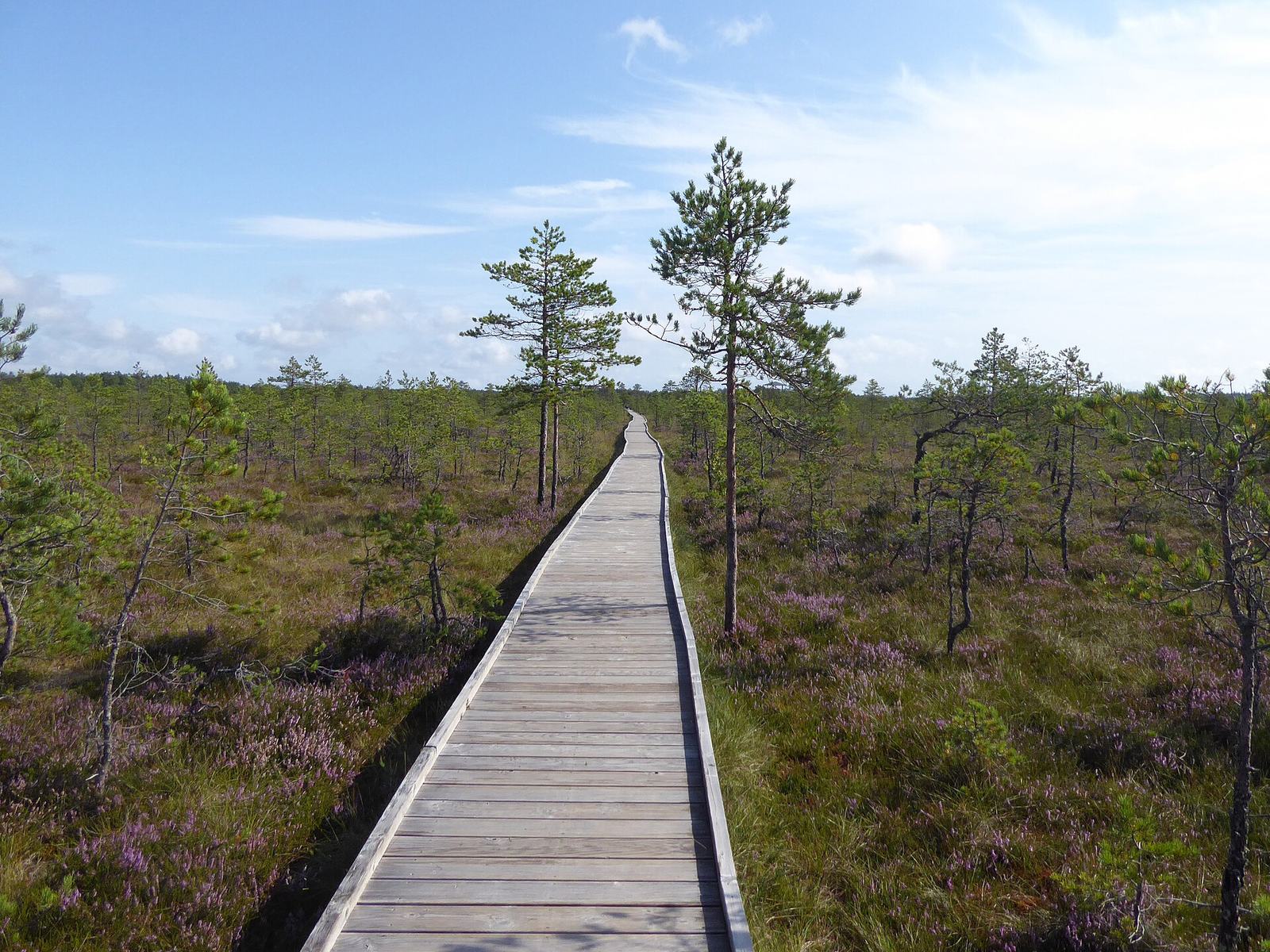
Lahemaa National Park & Viru Bog Day trip — the wild coast
Strengths
- The Viru Bog boardwalk is the signature walk: a wooden path out across open raised bog, bog pools and stunted pines, with a viewing tower over a landscape unlike anything else on a Baltic itinerary
- The park layers nature with history: the manor ensembles at Palmse and Sagadi and the fishing villages of the coast sit inside the same protected landscape, so one day holds bog, manor and sea
- Its name is its map — Lahemaa, the Land of Bays — and the peninsulas and bays of its coast reward a slow, stop-by-stop drive or tour
Watch out
- There is no railway through Lahemaa: the day runs on road — tour, rental car or the patchwork of regional buses — so the transport decision is the day's first decision, not an afterthought
- The bog is a boardwalk environment: stay on the boards, dress for open wet ground even in summer, and give the park a full day rather than the gap between ferries
Best for: the nature day of an Estonian trip — taken whole, with the manors and the coast folded into the same loop.
Start at Visit Estonia →Official site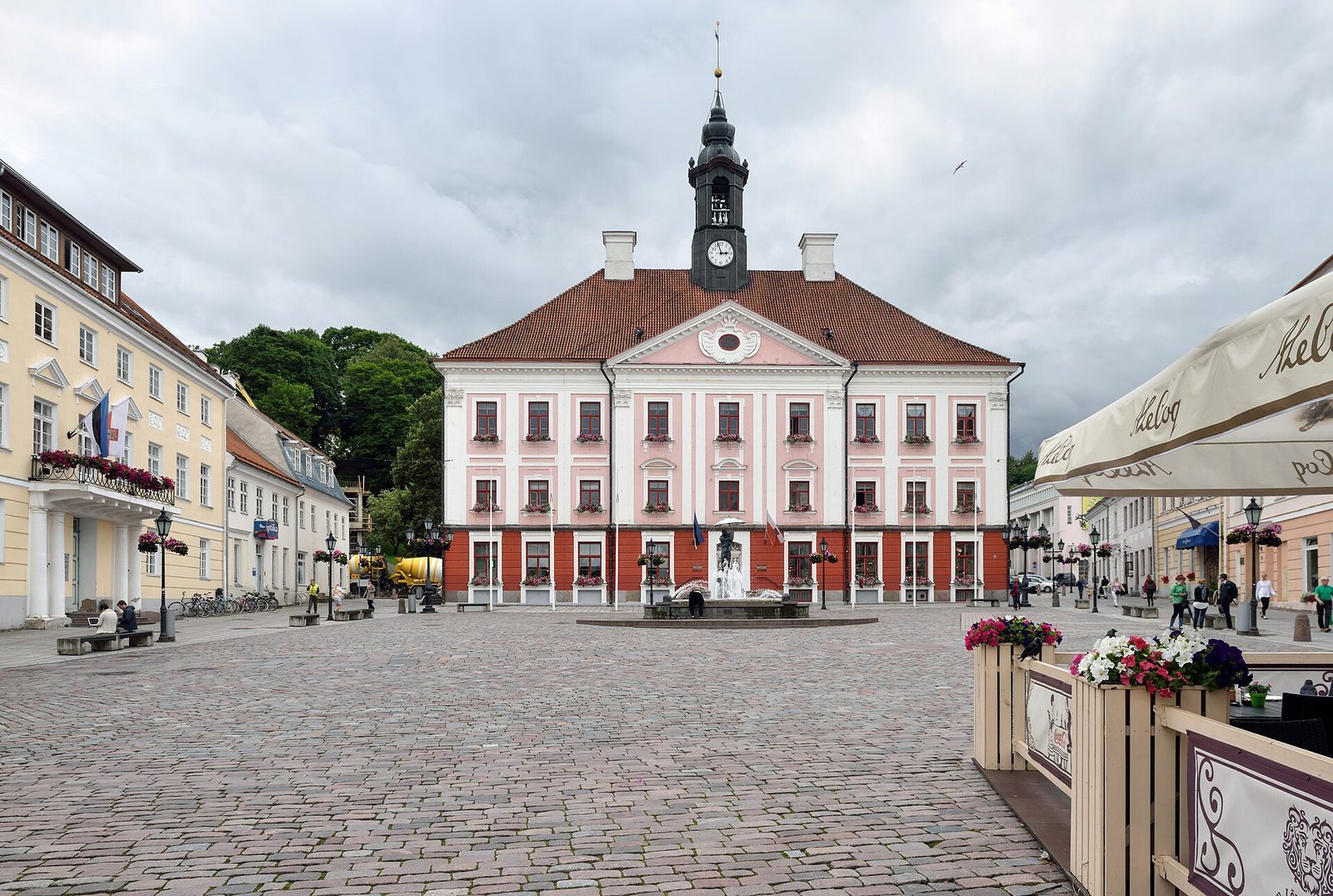
Tartu — the second city on the line south Second base — the university town
Strengths
- Tartu breaks the long line south into a human shape: Tallinn to Tartu by Elron, a night in Estonia's university town, then onward through Valga — the Baltic chain with a bed in the middle of it
- It has its own complete old town and riverfront gravity — Town Hall Square, the university quarter and the Emajõgi banks — so the stop earns its night on sights, not just on logistics
- From Tartu the cross-border connection continues on the same railway logic you already learned in Tallinn
Watch out
- Tartu is a temptation to under-plan the onward leg: the Valga connection's rhythm is fixed by the timetable, so the Tartu night should be booked around the onward train, not the other way round
- As a pure day trip from Tallinn it is a long one — the town rewards the overnight, and the day-trip version spends much of its day on the railway it came to enjoy
Best for: the Baltic overland traveller — and anyone who wants Estonia to be more than its capital.
See Elron →Official siteThe Tallinn Card — the one pass judgement in the capital
Tallinn has a city card of its own, sold by the city's official visitor organisation: the Tallinn Card, in versions counted in consecutive hours, opening more than fifty of the city's museums and attractions, with unlimited travel on the city's buses, trolleybuses and trams while it runs. It is a museum card with transport attached — judge it as one.
Guided tours of the same sights are a different product from the ferries and trains above. Judge a listing on what it actually includes — a Lahemaa tour's transport may be the part you are paying for, or the part you already have.
Browse Estonia tours on Viator →Affiliate link — you pay the same Browse Estonia tours on GetYourGuide →Affiliate link — you pay the sameWhere to sleep — one base, or a chain of them
The practical layer — how Estonia differs from a US trip
Which Estonia is yours?
Decisions that actually matter
Is Tallinn's public transport really free?
For residents, yes; for you, no. The free scheme belongs to registered Tallinn residents travelling on a personalised card, and the city's own visitor pages say plainly that international visitors generally pay. The good news is that paying is easy: a contactless bank card tapped on the validator, a QR ticket, or a loaded Ühiskaart — validated on every boarding.
Train or bus from Tallinn to Riga?
Both, honestly — they are different products. The train runs once a day through Tartu with a change at Valga and gives you the railway version of the Baltic chain; the coaches run the direct road more often and forgive a looser plan. If your trip already runs on rail or includes Tartu, take the train knowingly; if the day is built around a departure time, the coach usually fits it better. Check the operator's own planner for your date either way — works on the onward section keep moving the train's times.
Can Helsinki really be a day trip?
Yes — it is the classic move on this water, and the fast ferries exist for it. Two disciplines make it work: sail early enough that Helsinki gets a day rather than an afternoon, and plan the day backwards from a return sailing with one sailing of margin behind it. If either discipline feels like a strain, sleep in Helsinki instead; the two-base version is the same trip with the clock removed.
Is the Tallinn Card worth it?
Only if your Tallinn days are attraction-dense. The card bundles dozens of museums and sights with unlimited city transport — strong value stacked into museum-heavy days inside the city, and no value at all on the ferry, at Lahemaa or on the train to Tartu. Price your actual Tallinn list first; everything beyond the city boundary is never part of the arithmetic.
How do I get from the airport into Tallinn?
More easily than almost any capital in Europe: the airport sits close to the centre and a tram line connects it with the city, with taxis and pre-booked transfers covering the door-to-door versions. It is the one Estonian arrival that needs no strategy — which is precisely why the ferry terminal question, on departure day, catches people out instead. Know your terminal.
Prices and terms change often — the booking site is the final word. Timetables, fare conditions and ferry schedules change by season and by day; check the operator's own page for your date. Facts on this page checked against providers' official pages, November 2026.


