
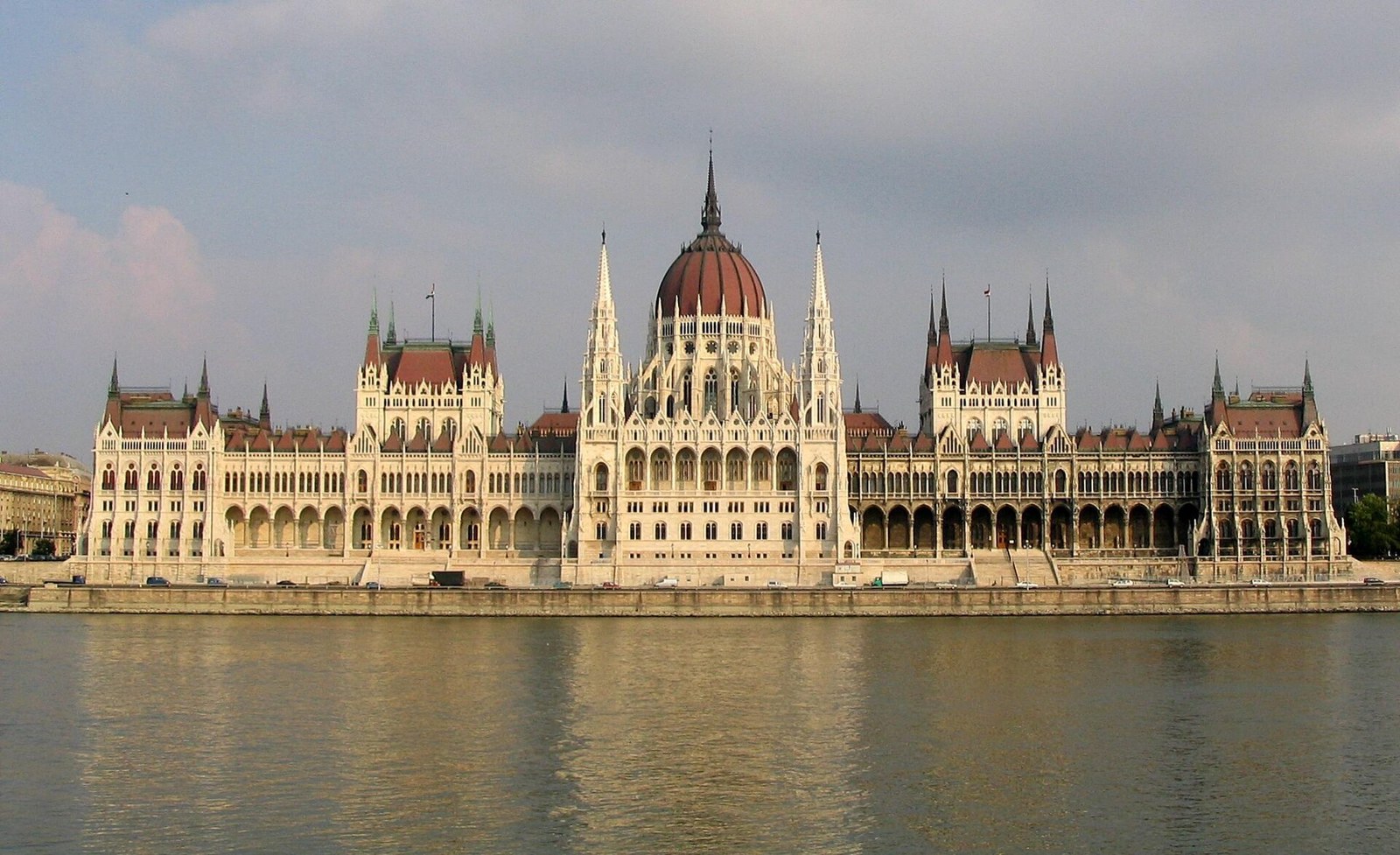
🇭🇺 Hungary, planned around Budapest
Some countries on this site ask you to choose a base. Hungary mostly chooses for you. The thermal baths, the Danube front, the Parliament, the castle hill and the city transport system are all in Budapest — and the national railway, MÁV, radiates out of the capital's stations to the rest of the country, so even a trip beyond the city starts and ends there. That makes Hungary the single-centre trip of this hub: one hotel, one transport system to learn, one bath culture to understand before you pay for it. The judgements that matter are concentrated too — which of Budapest's several main stations your train actually uses, whether you buy transport alone or the city's sightseeing card on top of it, and which bath ticket layer you are really buying. The money, meanwhile, is not the euro: Hungary pays in forint, and that one fact quietly changes every price comparison on the trip.
The lay of the land — one capital, and everything radiates from it
A Hungarian itinerary is built from three layers, and all three meet in Budapest: MÁV trains out of the capital's stations, BKK transport inside the city, and one dedicated airport link joining them. The table is the map; the cards carry the detail — including the cons.
| Layer | What it is | How booking works | Watch out |
|---|---|---|---|
| MÁV (national rail) | The state railway — domestic trains and international services radiating from Budapest's stations | Its own sales system, Elvira at jegy.mav.hu, and the MÁV app, sharing one account; buying without an account is possible | Budapest has several main stations — Keleti, Nyugati and Déli among them — and they are not interchangeable: the station printed on your ticket is the answer |
| BKK (city transport) | Budapest's integrated system — metro, trams, buses, trolleybuses and suburban HÉV lines under one ticketing logic | Single tickets, time-based travelcards, or longer passes, from machines, customer centres and the BudapestGO app | Single tickets must be validated — before you enter the metro, immediately on boarding elsewhere — while travelcards need no validation at all |
| 100E Airport Express | The direct bus between Liszt Ferenc International Airport and Deák Ferenc tér in the centre | A dedicated airport shuttle ticket only — bought in the BudapestGO app, at BKK outlets, or by bankcard on board | Ordinary BKK tickets and travelcards are not valid on it; the slower 200E bus plus metro is the layer ordinary tickets do cover |
The national layer — MÁV and the stations problem
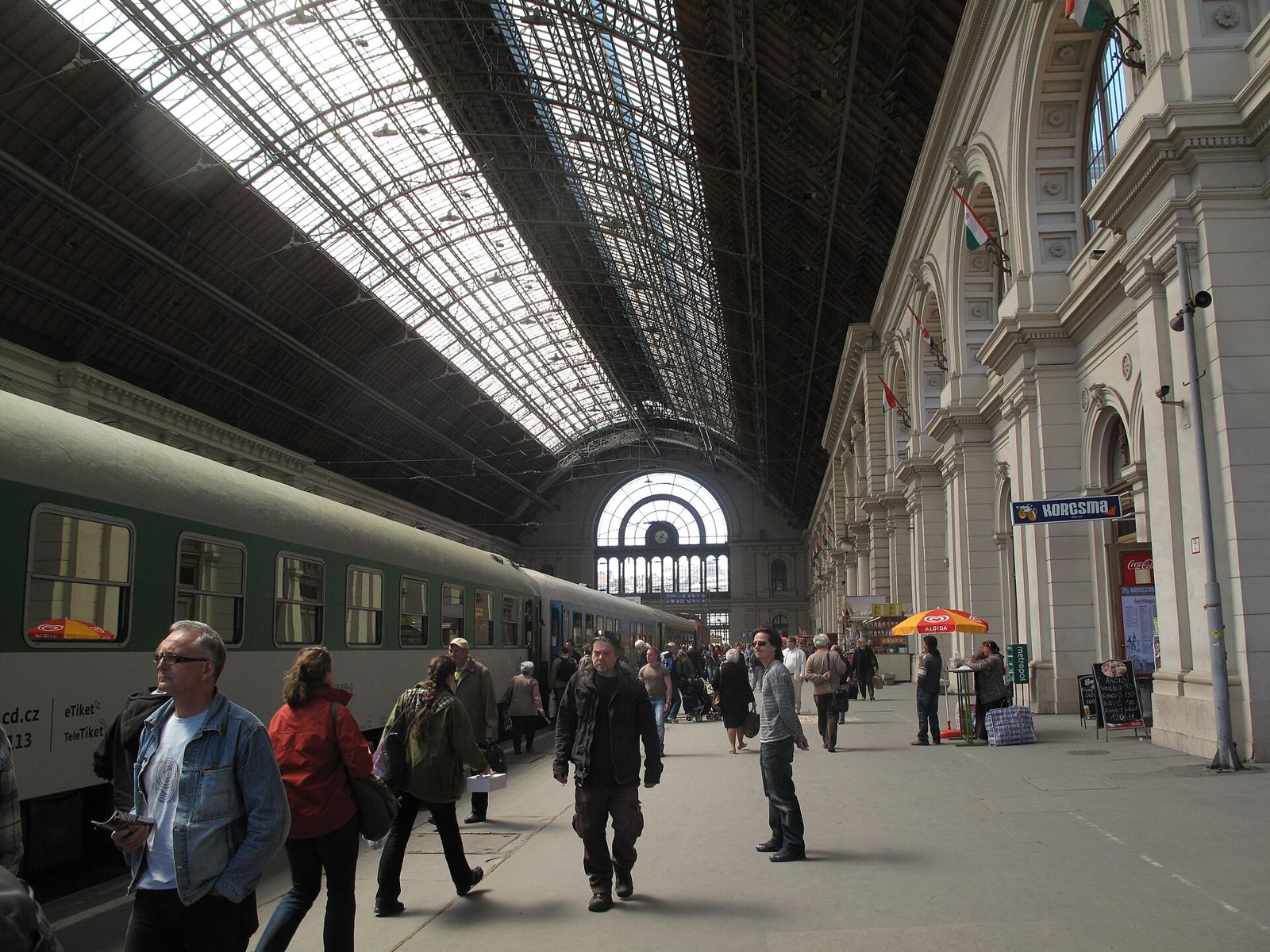
MÁV — Hungarian State Railways State railway — the radial network
Strengths
- One official shop for the country: the Elvira system at jegy.mav.hu and the MÁV app share one account, tickets bought on the web can be shown in the app, and PDF tickets arrive by email
- Real international depth from the capital: its own FAQ lists online tickets to direct destinations across Austria, Germany, Czechia, Slovakia, Romania, Ukraine, Croatia, Switzerland, Poland and Slovenia, with the range still expanding — Budapest is a genuine rail crossroads, not an endpoint
- Seat reservations and InterCity supplements can be bought on their own in the same system, for travellers already holding a ticket or pass
- No account is required to buy — an email address and acceptance of the terms is enough
Watch out
- Budapest's stations are the trap: the official route planner treats Keleti, Nyugati and Déli as the city's transfer stations, and a departure from the wrong one is simply a missed train — the station name on your booking outranks any general advice, including ours
- A seat reservation or supplement alone does not entitle you to travel, in MÁV's own wording: you still need the underlying ticket or pass
- Buy without an account and the system cannot resend or retrieve your tickets later — the official FAQ is blunt about keeping that confirmation email
- Online-bought Hungary and County passes live only in the MÁV app, while ticket-office passes are paper only — the format follows the channel
Best for: everything beyond the city — day spokes, cross-border legs and the Balaton direction alike, all booked in the operator's own system.
Rail passes (Eurail) Pass — read the structure first
Strengths
- One pass across many trains and borders — the natural shape for a multi-country rail trip that passes through Budapest
- Sold by Eurail itself; we link the official site and label it as such
Watch out
- A pass is not a seat, and MÁV sells its reservation and supplement layer separately — how a pass interacts with that layer on Hungarian InterCity services is a condition to read on Eurail's and MÁV's own pages before you buy
- We have no affiliate arrangement here and do not summarise pass prices or included-reservation terms we have not verified — the official terms are the comparison
Best for: trips where Hungary is one country among several — judge it on the whole route, not the Hungarian legs alone.
Getting in — the airport has two layers, and only one is direct
Liszt Ferenc International Airport — the airport many older sources still call Ferihegy — joins the city through BKK, and BKK's own pages draw a clean line between the two ways in. The 100E Airport Express runs around the clock, every day, between the airport and Deák Ferenc tér, the central hub where three metro lines meet, via Kálvin tér; BKK puts the journey to the centre at under an hour and sells it as the direct connection. It is also a product of its own: only the dedicated airport shuttle ticket is valid on it, bought in the BudapestGO app, at BKK customer centres, machines and ticket offices, or on board by bankcard through the Pay&GO device, with front-door boarding. Holders of a valid Budapest pass can instead buy a reduced add-on airport ticket in the app. The ordinary-ticket alternative is the 200E bus, which also runs around the clock and takes standard tickets and passes — but not the airport shuttle ticket — and hands you to the metro for the last stretch.
A pre-booked private transfer is the door-to-door alternative for groups and heavy luggage; judge it as a comfort product, not a speed product.
See KiwiTaxi →Affiliate link — you pay the sameGetting around Budapest — one integrated system, three ways to hold it
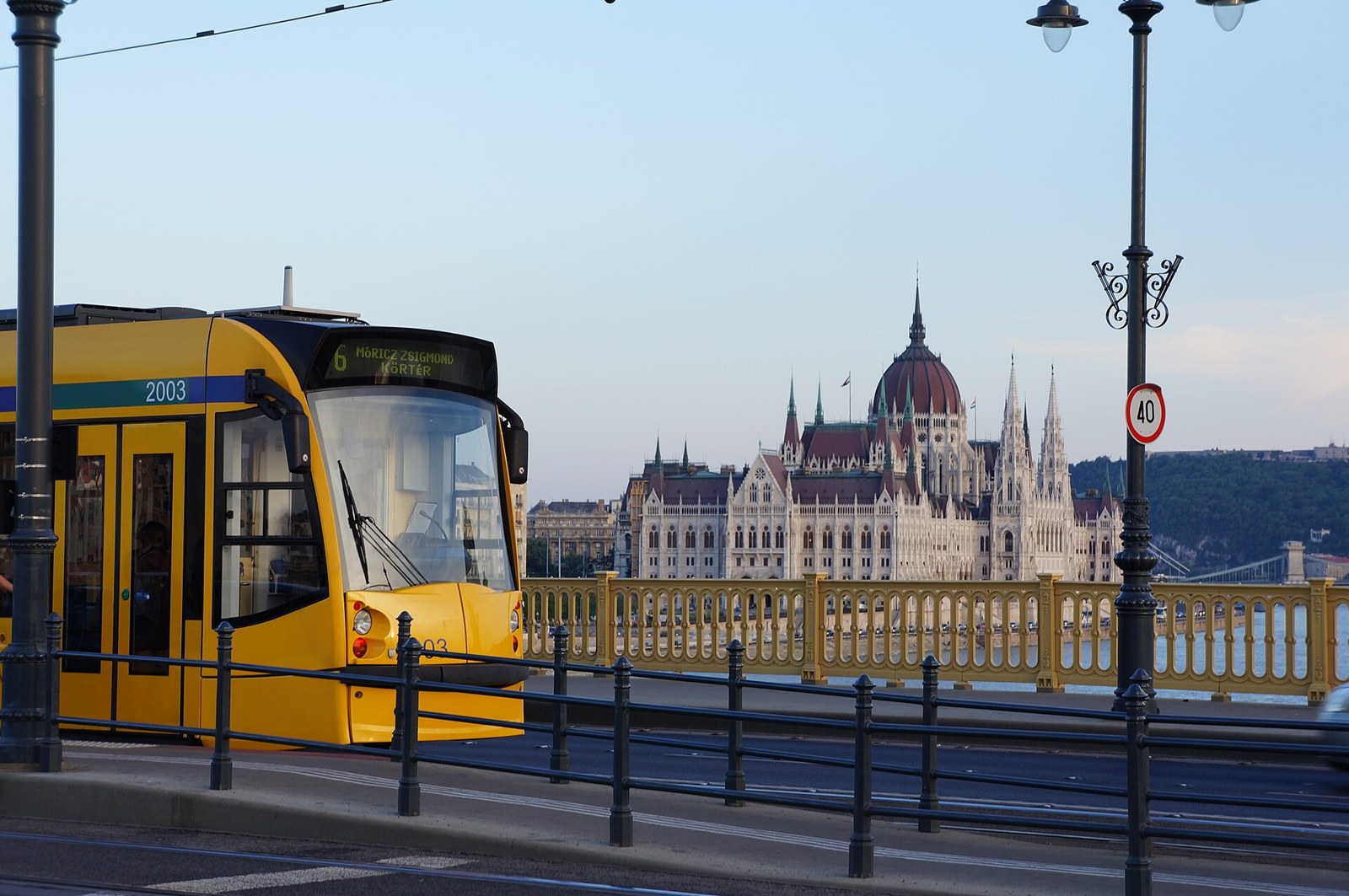
Inside the city, BKK binds metro, trams, buses, trolleybuses and the HÉV suburban lines into one system, and its official tourist guide separates the products more cleanly than most cities bother to. Single tickets cover one uninterrupted ride without a change of vehicle — on the metro they run on a time window that allows changing between metro lines — and they live or die by validation: stamp before you pass the metro station's validator line, or immediately on boarding a tram or bus, because crossing that metro line with an unvalidated ticket is already a finable offence in BKK's own warning. Travelcards are the visitor product: unlimited rides for a set period from the start time you choose, bought in advance if you like, with no validation at all. Passes are the longer layer: valid across the whole BKK network inside the city boundary and onto MÁV commuter trains and regional buses within it, but tied to a photo ID whose number is written on the pass. The official app, BudapestGO, sells the tickets and plans the journeys in one place.
The Budapest Card judgement — transport alone, or transport plus the city?
Budapest splits its visitor products in a way Prague does not. There, one official card bundles everything. Here, the transport-only layer (BKK's own travelcards, above) and the sightseeing layer are different products from different shelves: the Budapest Card is the city's official city card, sold through the city's own tourism channels, and it wraps unlimited public transport together with free or discounted entry across museums, attractions and experiences, in a family of versions counted in consecutive hours, with richer variants layering further services on top. So the Hungarian question is not "which pass?" but "am I buying transport, or transport plus a sightseeing programme?"
The baths — Budapest's second transport problem is a ticket problem
The thermal baths are not an add-on to a Budapest trip; for many visitors they are the trip. They are also sold in layers, and the layers decide your morning. Széchenyi, the great City Park bath, is the working example below. Gellért, the Art Nouveau bath at the foot of its hill, would normally be the alternative — see the status box at the top of this page: as of our November 2026 check it is closed for renovation, with completion planned for 2028, so the choice older guides describe does not currently exist. Other historic baths continue the culture on both banks; judge each on its own official site, because entry rules — including age rules — are set bath by bath.
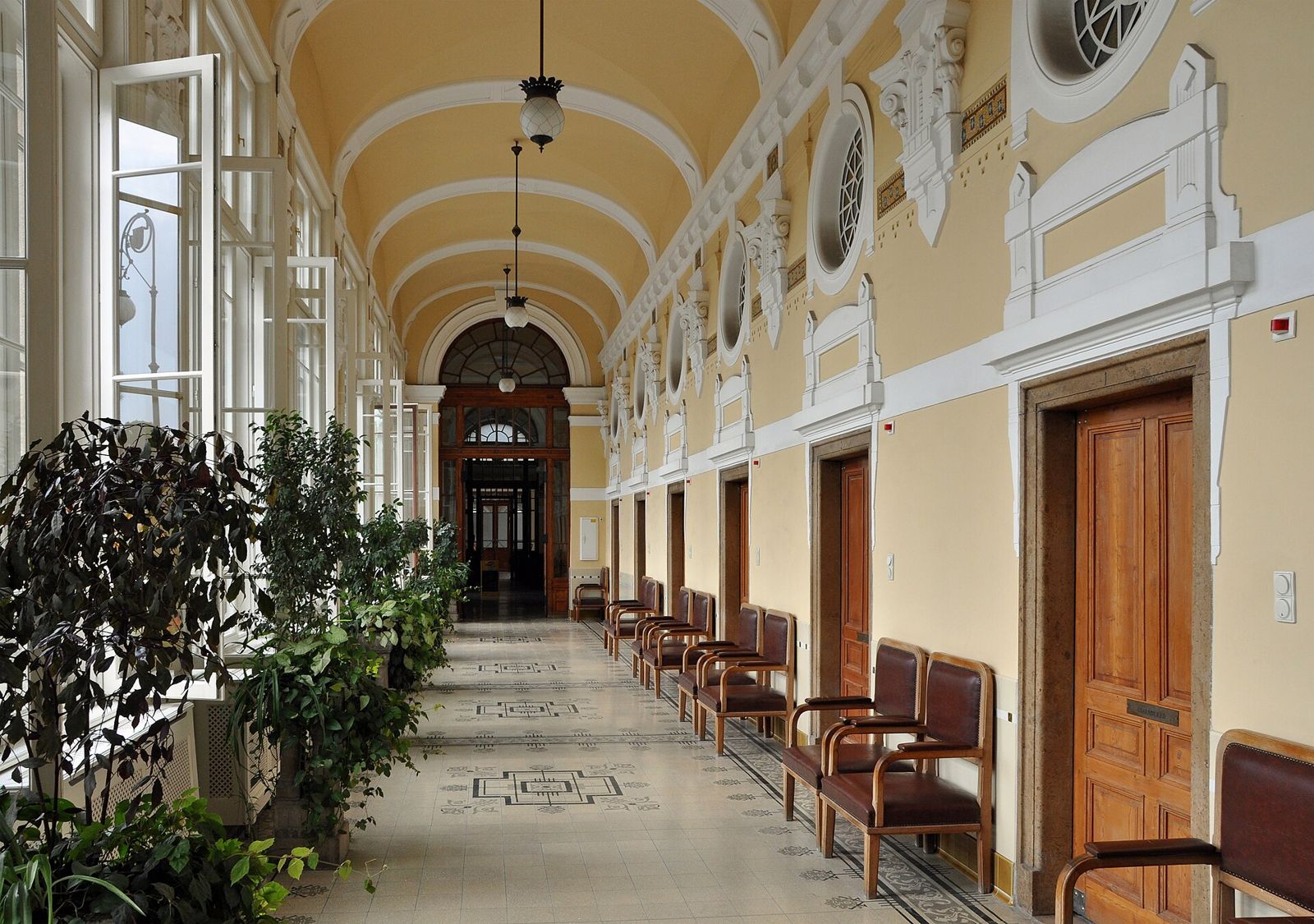
Széchenyi Thermal Bath Thermal bath — City Park
Strengths
- The city's flagship bath, open every day of the year including holidays, in City Park at the end of the oldest metro line — the easiest bath in Budapest to reach and to plan
- Online tickets bought on the official webshop are treated as priority when the bath is full, and the bath states the price is the same online as on the spot — booking ahead buys queue position, not a markup
- Two honest entry layers: a standard daily ticket you can use at any hour of the day, and a fast-track layer with its own entrance for skipping the line
Watch out
- Online tickets cannot be changed or refunded under the bath's own terms — the date you pick is the date you swim; the tickets are not personal, so they can be passed on, but the bath will not move them
- Fast-track tickets are slot-bound — a morning ticket must enter in the morning, an afternoon ticket in the afternoon; only the standard daily ticket is enter-anytime
- Children under fourteen cannot visit at all since August 2025, outside narrow medical exceptions arranged in advance — this is a grown-ups' bath now, and families should plan around the city's other baths
- Nothing to wear is included: towels, robes and swimwear are bring-your-own or buy at the shop — there is no rental service; slippers are mandatory, and a swim cap is required in the lap pool
- Your QR code is not your entry: it is exchanged for a wristband at the door, and euros are not accepted — pay in forint or by card
Best for: the classic Budapest bath day — booked online in advance, on a standard ticket, with your own towel in the bag.
See Széchenyi Bath →Official siteTour platforms sell bath entry bundled with tastings, transfers and other extras. Those are different products from the bath's own ticket: judge any bundle by whether its entry layer matches the one you wanted — and never for a bath whose own site says it is closed.
Browse Budapest tours →Affiliate link — you pay the same Browse on GetYourGuide →Affiliate link — you pay the sameThe two banks — Parliament on one side, the castle on the other
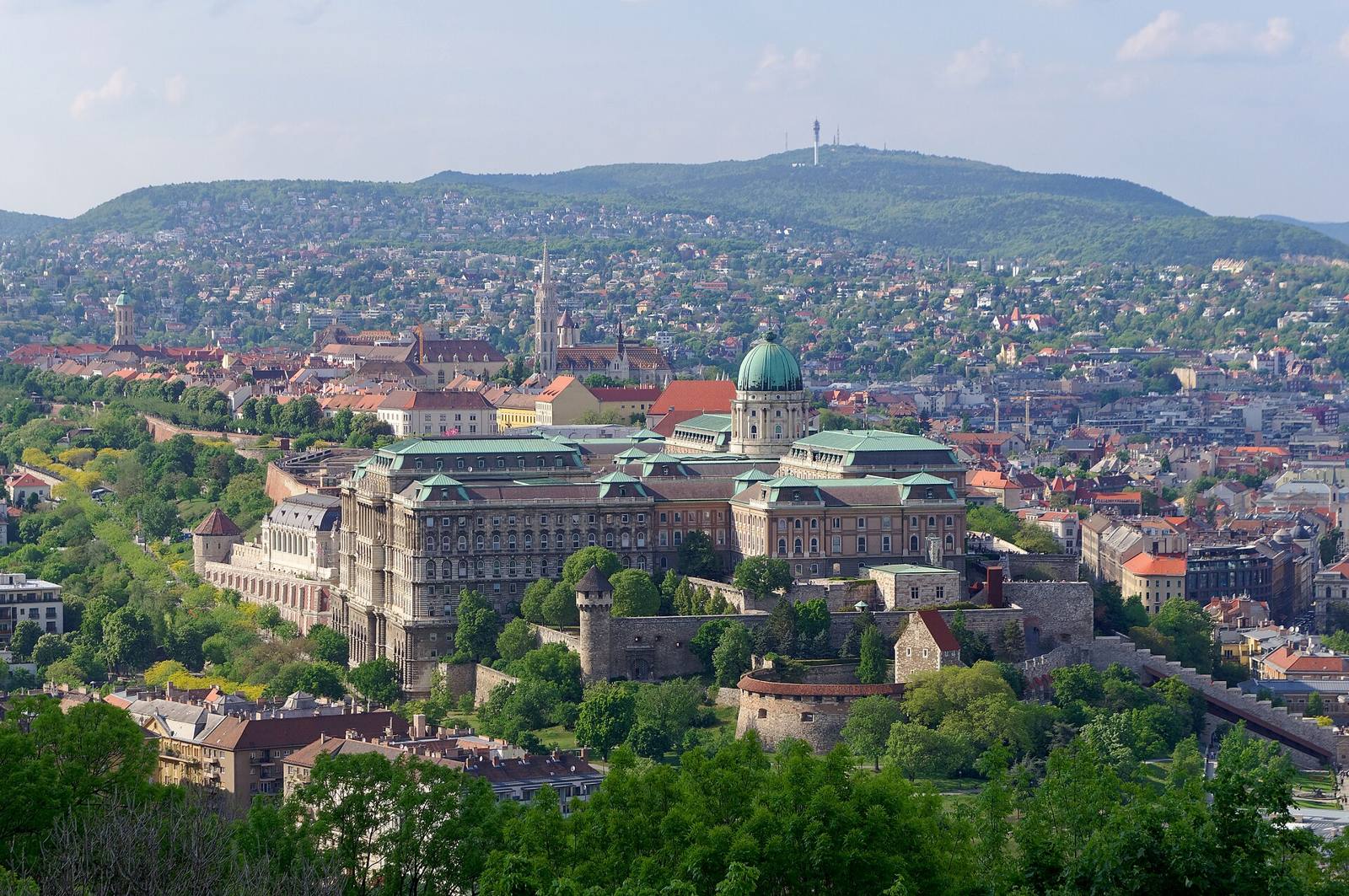
Budapest's sightseeing geography is a river with a landmark on each bank. On the Pest side, the Hungarian Parliament Building stands on the Danube front at Kossuth Lajos tér: the exterior is a free riverbank walk, while the interior is a different product entirely — visits run only as guided tours, in timed language groups through the Visitor Centre, with security screening and the building's official business able to change the programme. It is the one Budapest sight to treat like a train: a timed appointment you book ahead through the official visitor channels, not a walk-up museum. On the Buda side, Castle Hill stacks the Royal Palace, Matthias Church and the Fisherman's Bastion above the Chain Bridge — a district you walk for free, with its museums ticketed separately inside it.
Beyond Budapest — spokes, honestly framed
The radial railway makes the rest of Hungary a set of spokes from the capital rather than a second base problem. Lake Balaton, the country's great lake, is the classic summer spoke, with the shore towns strung along the rail lines out of the capital's southern and western stations. The regional cities — Debrecen in the east, Pécs in the south-west, Szeged in the south, Eger in the north-east — are each their own day-or-overnight judgement on MÁV timetables, and Vienna sits close enough that Budapest is as often the second half of an Austrian trip as the whole of a Hungarian one. In every case the discipline is the same: the timetable on MÁV's own system for your date, and the station name on the ticket, decide what is actually possible — this page deliberately carries no journey-time table to go stale.
Where to sleep — one base, on the right bank for you
The practical layer — how Hungary differs from a eurozone trip
Which Hungary is yours?
Decisions that actually matter
Budapest Card or a BKK travelcard — how do I choose?
Start from what each product is. The travelcard is transport only: unlimited BKK rides for its window, nothing else. The Budapest Card is the city's official sightseeing card: the same unlimited transport, plus free or discounted entry across its programme. List the paid sights you will genuinely enter, check each one's card terms on the official pages — remembering details like Széchenyi's on-site-only, standard-ticket-only discount — and let that count decide. Mostly free streets and riverbanks: travelcard. A dense museum-and-bath programme: the card earns its difference.
Which Budapest station does my train use?
The one printed on your ticket — there is no safe general rule to memorise in its place. Budapest's main stations, Keleti, Nyugati and Déli among them, divide the network between them, and MÁV's own planner is built around transfers between them. Read the station name at booking, plan the cross-city leg if you are connecting, and never navigate by the word "Budapest" alone.
Should I book Széchenyi in advance?
Yes, if your date is fixed — the bath itself advises it, online tickets get priority when the house is full, and the bath states the price is the same as on the spot. The trade is flexibility: online tickets cannot be changed or refunded, so book when the day is certain, buy the standard daily ticket unless the fast-track entrance is the point, and bring your own towel and slippers.
Can I visit Gellért Bath?
Not as of our November 2026 check: the operator's notice gives a closure from 1 October 2025 for renovation, with completion planned for 2028. Plans on multi-year restorations move, so verify on the bath's own site close to your trip — and treat any third-party ticket for it, sold in the meantime, as a warning sign rather than an opportunity.
Do I need ETIAS for Hungary now?
Not as we checked in November 2026: ETIAS was not in operation and no applications were being collected, with the EU to announce the start date several months in advance. The EES border registration, by contrast, has been operating since October 2025. Verify both on the EU's official travel site — and never buy an "ETIAS application" from a third-party site.
Prices and terms change often — the booking site is the final word. Timetables, bath entry rules and fare structures change by season and by day; check the operator's own page for your date. Facts checked against providers' official pages, November 2026.


