
🇷🇴 Romania — capital or mountains?
Romania is really two trips sharing one flag, and the first decision is which of them leads. In the south, Bucharest — a big, layered capital of grand boulevards, a colossal palace and a cafe-crowded old town — holds the main airport and the main station. North-west of it, over the Carpathian mountains, lies Transylvania: Brașov's Saxon old town under its mountain, Bran Castle on its rock, the royal rooms of Peleș at Sinaia, and the inhabited medieval citadel of Sighișoara. The railway that joins the two trips is the country's famous slow variable — state trains of several grades, private operators alongside them, and a mountain main line that is worth the ride in itself. Choose the wrong base and the holiday becomes a commute; choose well, and Romania's size turns from a problem into the point.
The lay of the land — one capital, one mountain wall, two trips
Bucharest sits on the southern plain; the Carpathians draw a wall across the country's middle; Transylvania lies behind that wall. Almost every Romanian itinerary is a negotiation with that geography: the airport and the palace in the south, the castles and Saxon towns in the north, and the Prahova Valley line climbing between them.
| Layer | What it is | How booking works | Watch out |
|---|---|---|---|
| CFR Călători trains | The state passenger railway — InterCity, InterRegio and Regio grades radiating from Bucharest Nord toward Brașov, the Black Sea coast and the whole country | One official home: cfrcalatori.ro and its online booking system, plus station counters | It is not the only operator: private companies run alongside CFR on parts of the network, and a pass or ticket habit built on one may not cover the other |
| Private operators | Companies such as Transferoviar Călători, Regio Călători, Softrans and Astra Trans Carpatic sharing routes with the state railway | Each sells through its own channels; the timetable, not the brand, is what to compare | On the Bucharest to Brașov line the choice of train is a choice of operator, grade and stopping pattern all at once — read the specific departure, not the route in general |
| STB & Metrorex | Bucharest's two city systems: STB buses, trams and trolleybuses on the surface; the Metrorex metro below it | Contactless bank card works across both worlds, but the underlying tickets are run by two operators — integrated time tickets exist for combining them | A surface ticket is not a metro ticket by default: the combined product is a specific purchase, not an assumption |
| Bucharest Airport (OTP) | Henri Coandă International Airport at Otopeni, north of the capital | A CFR airport train runs to Bucharest Nord; an STB express bus runs into the city centre | There is no airport metro yet, however finished the construction hoardings look — the train and the express bus are the plan |
The railway — grades, operators and one great mountain line
CFR Călători — the state railway National rail — the spine, shared
Strengths
- One official timetable and booking home for the network's core: Bucharest Nord is a genuine national hub, and the Brașov line through the Prahova Valley is one of Europe's great scenic main lines
- The grade structure is honest once learned: InterCity for the fastest limited-stop runs, InterRegio for the long-distance stopping layer, Regio for local work — the departure board tells you which Romania you are boarding
- Modernisation is visibly under way: new electric trains are entering service on the busiest routes, Bucharest to Brașov among them
Watch out
- Romania's trains are a byword for slowness for a reason: journey times vary widely by grade and by day, and delays are a structural possibility to plan around, not bad luck to be surprised by
- The network is shared: private operators run real services on real routes, and their trains sit outside a CFR-only ticket or pass assumption
- Long-distance trains carry seat arrangements that differ by grade — check what your specific departure requires on the booking screen, rather than boarding on a regional habit
Best for: the Bucharest to Brașov crossing and the country's long spines — taken by grade, with slack built into anything that connects.
Rail passes (Interrail / Eurail) Pass — read the operator list first
Strengths
- Romania sits inside the European pass system, and for a multi-country journey crossing the Carpathians the pass shape fits the geography
- Sold by the pass organisations themselves; we link the official site and label it as such
Watch out
- The shared network cuts both ways: pass validity follows the operator, and Romania's private operators are the detail to verify for your exact trains before relying on a pass here
- We do not summarise pass prices or operator terms we have not verified line by line — the official pass conditions for Romania are the comparison
Best for: cross-border journeys where Romania is the mountain chapter of a longer rail story — verified train by train.
Bucharest — the capital on its own terms
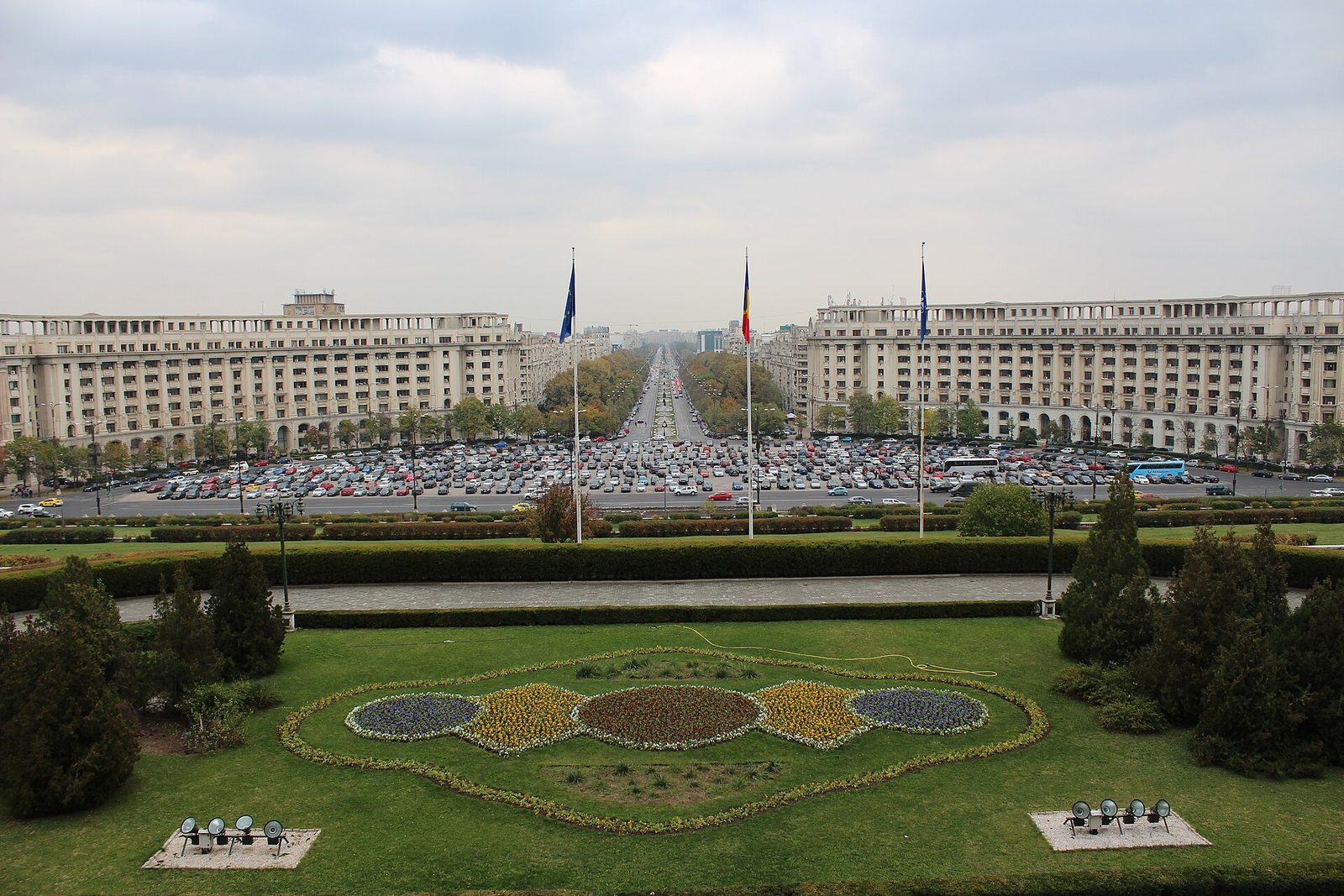
Bucharest is not a warm-up act for the castles. It is a big-city chapter of its own: the monumental boulevards and the palace that close the Ceaușescu era, the belle-époque bones along Calea Victoriei, and an old town that runs on cafes and late nights rather than on sightseeing discipline.
Palace of the Parliament & the old town Base — the capital & the hub
Strengths
- The Palace of the Parliament is the capital's defining sight: one of the largest administrative buildings on earth, visited on guided tours that are the only way inside — scale you can argue about, but not ignore
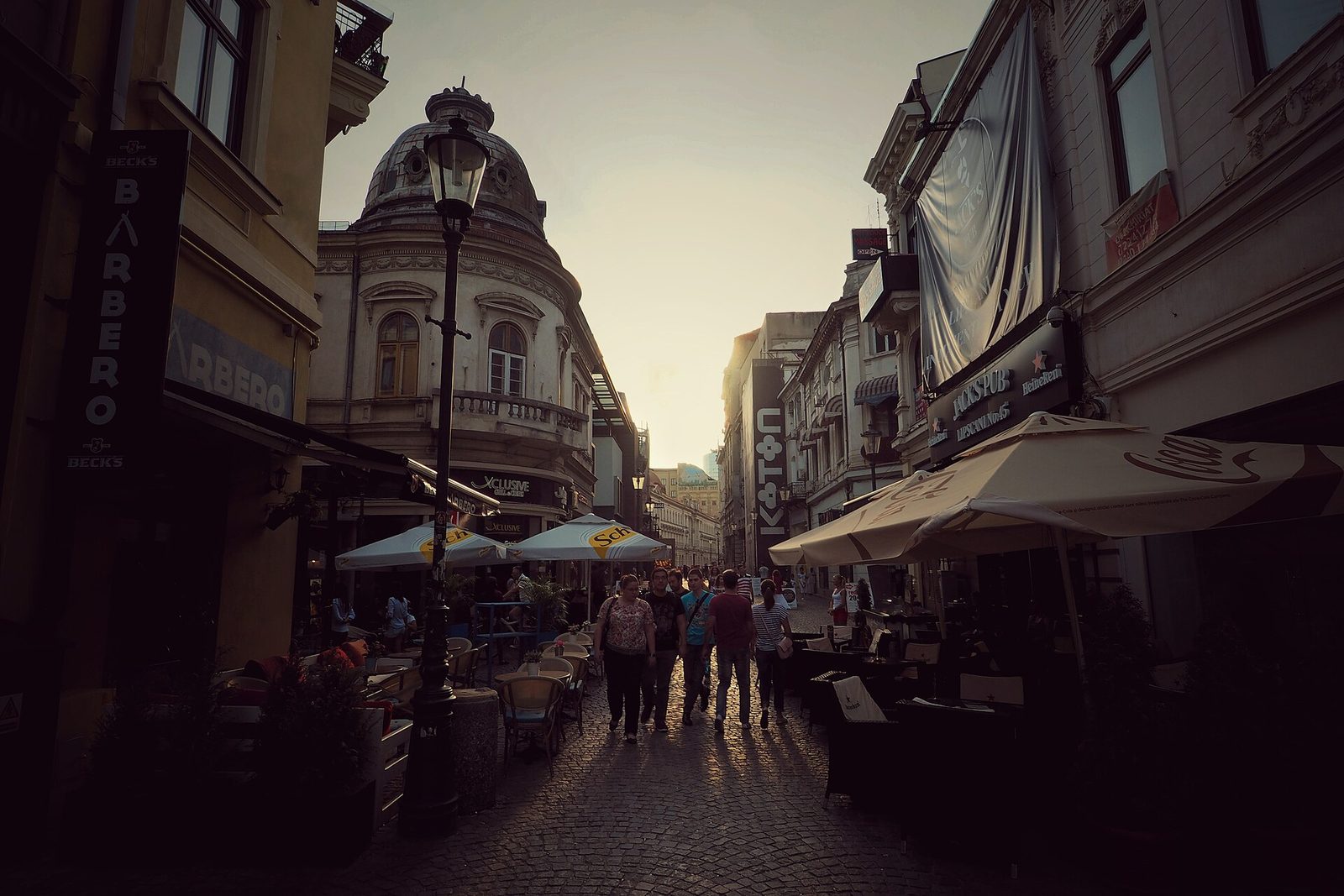
- The old town, Lipscani, gives the evenings back: a compact, walkable core of streets, churches tucked between the cafes, and the city's social life at street level
- Calea Victoriei strings the gentler Bucharest together — the Romanian Athenaeum, Revolution Square and the museums along one historic avenue
Watch out
- The palace is a working parliament with a security regime, not a walk-up museum: tours run on reservation, and an original identity document is part of the entry ritual — arrange it before the day, not at the gate
- Bucharest sprawls and its traffic is notorious: the sights are spread across a big city, and the metro, not the road, is the reliable way between its quarters
Best for: the first or last two days of the trip — arrival, the palace, the old town's evenings, and the station for the mountain crossing.
Brașov — the mountain base
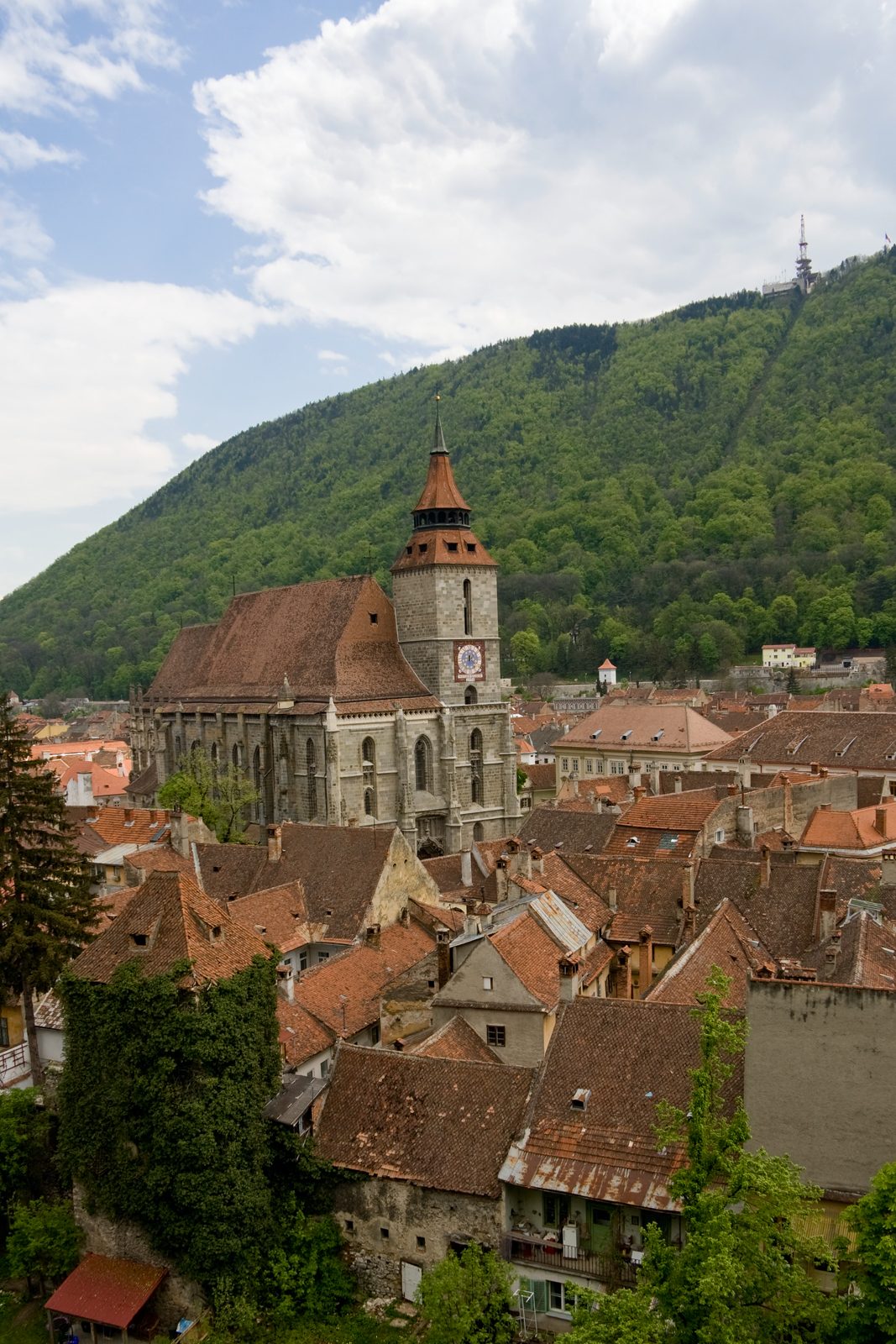
Brașov is where the Transylvanian half of the trip should sleep. A Saxon old town gathered around its council square, the great Black Church at its heart, and a wooded mountain signed with the town's name rising straight from the streets — all of it reached by the mountain line from Bucharest, and none of it done justice by a day trip.
Brașov old town Second base — the Transylvania hub
Strengths
- The old town is compact and complete: Council Square, the Black Church, the old walls and gates, and Mount Tâmpa above it all as a viewpoint you can walk to from lunch
- It is the region's natural rail node: Bran is a short road hop, Sinaia and Peleș lie back down the same line the train arrived on, and Sighișoara continues by rail into Saxon country
- Evenings belong to the town, not the tour buses: Brașov after the day trips return to Bucharest is a different, quieter place
Watch out
- The station is not the old town: arriving by train leaves one more link — a city bus or a walk of real length — between the platform and the square, so plan the last step as part of the journey
- Brașov is the region's magnet in season: the square and the castle road carry that popularity, and early starts buy back the quiet
Best for: the Transylvanian base — two or three nights that turn the castles from excursions into a neighbourhood.
Bran & Peleș — two castles, two honest stories
Romania's two famous castles are usually sold as a pair, and they reward being read as opposites. Bran is a border fortress wrapped in a literary legend; Peleș is a royal palace built as a work of art. Both are worth the journey — for different, true reasons.
Bran Castle Day trip from Brașov — the fortress & the legend
Strengths
- The building itself earns the visit: a medieval fortress on its rock at the old pass between Transylvania and Wallachia, later a beloved royal residence of Queen Marie, whose rooms are the castle's real interior story
- From Brașov it is the region's easiest castle hop — the castle's own visitor pages lay out the road from both Brașov and Bucharest, and the pairing with a Brașov base is the natural shape
- The legend is handled best as what it is: the castle's fame as a certain count's home is a literary and marketing layer over a genuine fortress — enjoy both layers, labelled
Watch out
- Do not build the visit on the vampire: there is no sound evidence the historical Vlad Țepeș lived here, and treating Bran as his residence is the one claim this page will not make
- It is Romania's most marketed sight, with crowds to match in season; opening patterns vary across the year, so check the castle's own pages for your date
Best for: a Brașov-based morning — fortress first, legend second, back in town for lunch.
See Bran Castle visitor pages →Official site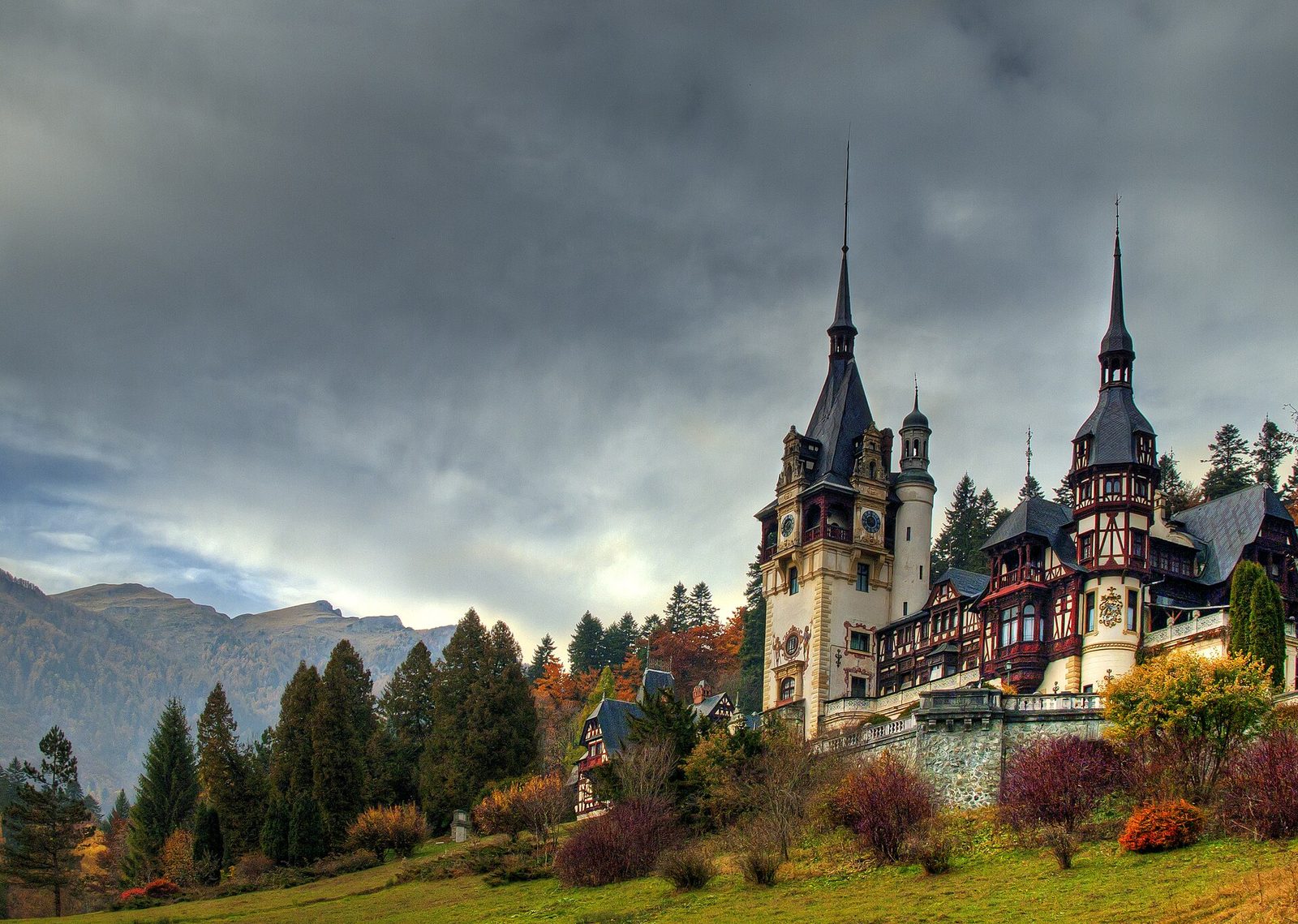
Peleș Castle, Sinaia On the line — the royal palace
Strengths
- Peleș is the connoisseur's castle: the summer residence King Carol I built at Sinaia below the Bucegi mountains, a palace of carved wood, stained glass and themed state rooms rather than a fortress
- It sits on the journey, not off it: Sinaia is a station on the Bucharest to Brașov line, so the palace can be a stop on the crossing day as easily as a trip back from Brașov
- The mountain setting completes it — terraces and gardens under forested peaks, in a resort town built around the royal presence
Watch out
- Peleș keeps a museum's discipline, with regular closed days in its pattern and seasonal closures announced by the museum: the palace decides the day, so verify your date's opening on the museum's own pages before the train, not after it
- Sinaia's station and the palace are not neighbours: the castle stands above the town, and the uphill last leg is part of the plan
Best for: the crossing day's great stop — off the train at Sinaia, up to the palace, on to Brașov by evening.
Sighișoara — the citadel that is still a town
Sighișoara citadel Day trip or overnight — the Saxon citadel
Strengths
- The Historic Centre of Sighișoara is a UNESCO World Heritage site with a rare quality: its medieval Saxon citadel is still inhabited, a living town inside its towers and walls rather than a preserved set
- The Clock Tower, the covered stairway and the guild towers make a half-day that needs no embellishment — and the town is also where the historical Vlad III was born, the region's one documented thread to the Dracula story
- It continues the railway story naturally from Brașov, deeper into Transylvania on the same network
Watch out
- Transylvanian rail legs are the slow layer of a slow network: read the specific trains for your date and let the citadel, not the timetable, set the day's pace — an overnight here is often the calmer product
- The citadel is small and steep: cobbled lanes and the climb to the church on the hill are the terrain, in all weathers
Best for: the deep Transylvania day — or the quiet night that turns a castle trip into a journey.
Guided tours of the same sights are a different product from the trains and tickets above. Judge a listing on what it actually includes — a Bran and Peleș tour's road transport may be the part you are paying for, or the part the railway already gives you.
Browse Romania tours on Viator →Affiliate link — you pay the same Browse Romania tours on GetYourGuide →Affiliate link — you pay the sameWhere to sleep — the two-base answer
The practical layer — how Romania differs from a US trip
Which Romania is yours?
Decisions that actually matter
Should I base everything in Bucharest and day-trip to Transylvania?
For a glimpse, it can be done; for Transylvania, it should not. The mountain crossing is the country's longest-feeling leg, and doing it twice in a day leaves Brașov as a pause between trains and Bran as a queue between roads. Sleep in Brașov for the mountain half. The one exception is the crossing day itself, done once and done well: Bucharest in the morning, Peleș at Sinaia on the way up, Brașov by evening — a journey, not a commute.
Is Bran Castle really Dracula's castle?
Not in any sense a historian would sign. Bran is a genuine medieval border fortress and a real royal residence — Queen Marie's home, with her rooms to prove it. Its Dracula identity comes from the novel's afterlife and a century of marketing that matched a fictional description to a photogenic rock. The historical Vlad III belongs to other places — born in Sighișoara, ruling from Wallachia. Visit Bran for the fortress it is; the legend is the souvenir, not the substance.
How bad are Romanian trains, honestly?
Variable — and the variation is the answer. The grade decides most of it: InterCity and the better InterRegio departures on the main lines are a civilised way to cross the mountains, with new trains joining them; the slow Regio layer and the network's works programme can stretch any leg. Build slack around connections, choose departures by grade rather than by the clock alone, and the railway is a pleasure with a reputation worse than its best self.
Train or bus from the airport into Bucharest?
Train, when its timetable meets your flight: the airport service to Bucharest Nord runs on rails past the capital's road traffic and lands you at the metro's door. The STB express bus is the forgiving alternative, running into the centre itself. What the choice is not is a metro — the airport line is still being built, and any plan that starts with it starts with a fiction.
Do I need euros in Romania?
No — Romania's money is the leu, and the leu is what tickets, meters and menus are priced in. Cards and contactless payment carry most city spending, so the practical question is not which currency to bring but to stop converting in your head at a rate you half-remember: check the lei figure on the booking or the bill itself, which is the only price that exists.
Prices and terms change often — the booking site is the final word. Timetables, fare conditions and the castles' visiting arrangements change by season and by day; check the operator's own page for your date. Facts on this page checked against providers' official pages, November 2026.


