Pilgrimage Routes · Route 5

The Holy Land: In the Order of His Life

Nazareth to Jerusalem, in the order the story happens — announced, born, baptised, teaching by a lake, praying in a garden, and an empty tomb that two traditions guard in two places.

⚠️ Before anything else — the current safety picture (checked 9 November 2026). The U.S. State Department's advisory for Israel stands at Level 3 — Reconsider Travel (issued 23 October 2026), and South Korea's foreign ministry bans travel within 4 km of the Lebanon border. Conditions in this region change quickly. This page is written as a record and a plan for safer days, not as an invitation to travel now: read the official advisories before any decision — U.S. State Department advisory for Israel · our Travel Safety page (advisory data: advisories.js, Israel = Level 3). The booking links below are the same planning links we carry on every route; treat them as research tools, check the advisory again before paying for anything, and prefer bookings you can cancel.
How this route works — and its one big rule. The stops are in story order, not driving order, and we do not promise distances or travel times. The rule: on this route more than any other, we separate traditional sites (places Christian tradition has venerated, often for well over a thousand years) from excavated evidence (what archaeology has actually found and dated). Every stop labels which is which, in those words. Neither category is dismissed — a tradition kept for seventeen centuries is itself a historical fact — but the two are never blended to make a claim stronger than it is. Affiliate note: the “Plan this stop” boxes carry affiliate links (marked; you pay the same) and official links (marked “Official link”). Read the safety box above before using any of them.
Your pilgrim stamps — 0 of 9 stops

Stamps live only on this device (browser local storage, key pilgrimage_stamps_v1) — never sent to a server, and they work offline. A stamp is your own honest record, nothing more.

The Basilica of the Annunciation, Nazareth
STOP 1Nazareth

Nazareth — The Annunciation

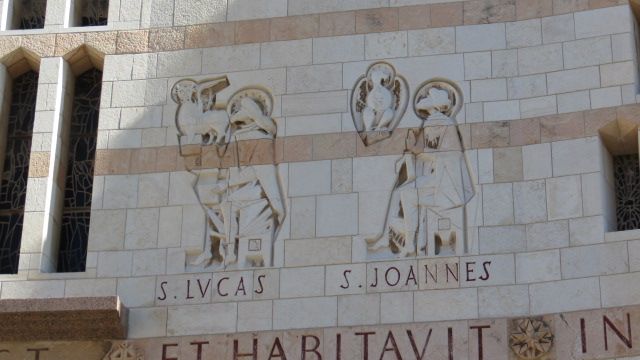
The route begins where the Gospel story begins: Nazareth, a small Galilean town then, a busy Arab-Israeli city now. The Basilica of the Annunciation in the photograph, consecrated in 1969, is the largest church building in the Middle East — and the fifth church on its site, layered over Byzantine and Crusader remains around a grotto that Christian tradition has venerated as the place of the Annunciation since the early centuries. That sentence is written the way this whole route is written: the tradition is ancient and specific; the claim about the exact room belongs to the tradition, and we present it as the tradition presents it.

Nazareth rewards slowness: the old city's lanes, the Greek Orthodox Church of the Annunciation with its spring, and the synagogue church kept by tradition all carry their own versions of the story — told side by side, not ranked.
Why it matters: the route opens in a family home in a hill town: every later stop's public events grow out of thirty quiet years here.

Plan this stop

Guided toursViator — Nazareth tours →Affiliate link — you pay the same
Tours tooGetYourGuide →Affiliate link — you pay the same
Stay nearbyStay22 — places to stay →Affiliate link — you pay the same
CoverSafetyWing travel insurance →Affiliate link — you pay the same
The Church of the Nativity, Bethlehem
STOP 2Bethlehem

Bethlehem — The Birthplace

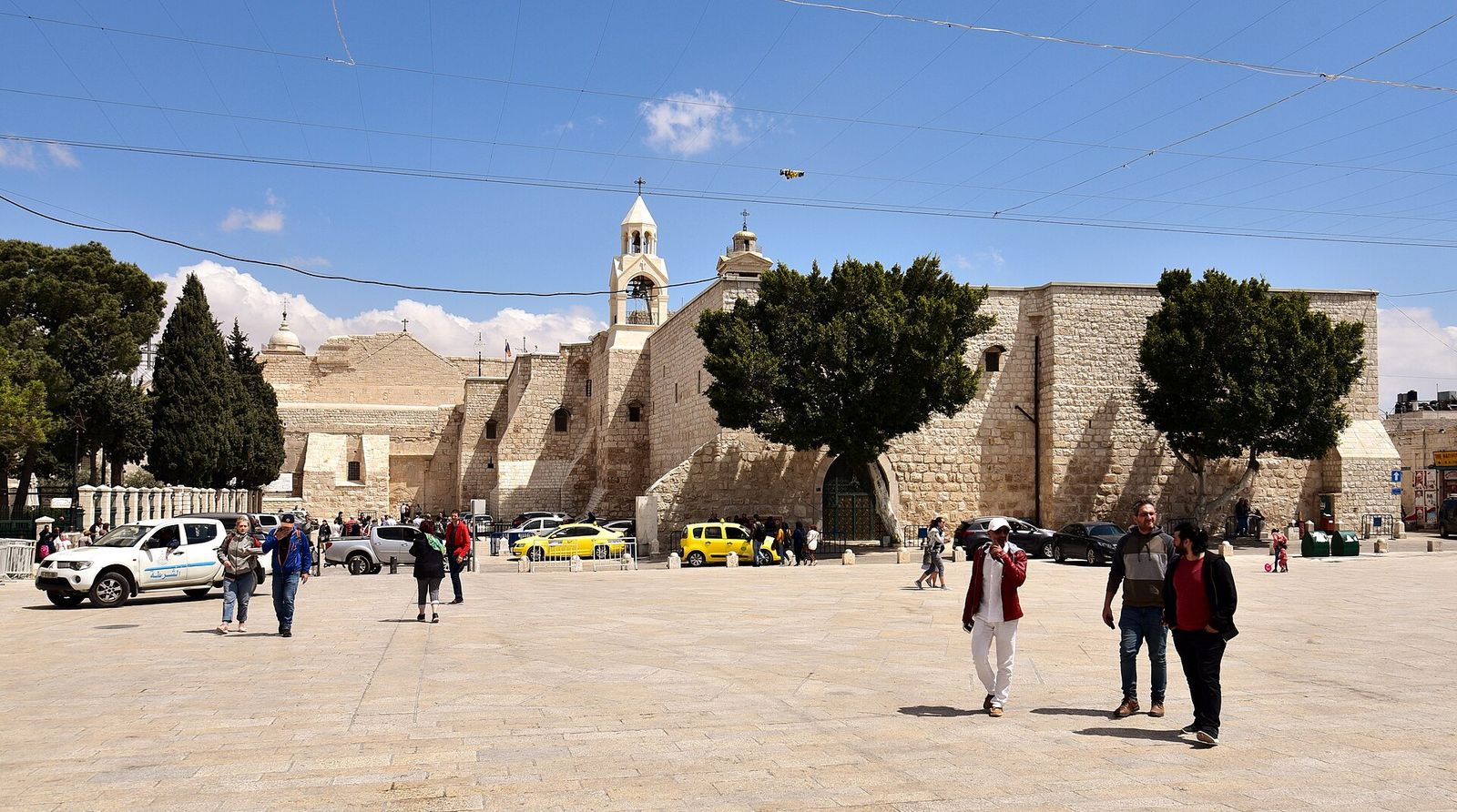
Six miles south of Jerusalem, Bethlehem keeps the oldest continuously used church in this land: the Church of the Nativity, first built under Constantine around 339 and rebuilt under Justinian in the sixth century, entered by the famous low Door of Humility. Beneath the altar, a grotto with a silver star marks the place where tradition — continuous since at least the second century — locates the birth of Jesus. The church is shared, under a centuries-old Status Quo, by Greek Orthodox, Armenian and Roman Catholic custodians.

Bethlehem today is a Palestinian city in the West Bank. Reaching it involves checkpoints and a change of driver or guide for most visitors; we do not smooth that over, and any tour booking should be read with the current safety box at the top of this page in mind.

Why it matters: a birth in a cave-stable, in a town the prophets named: the route's second stop is its most visited and its most fragile — a living church, not a museum.
🏛️ Factual link: the Church of the Nativity and the Pilgrimage Route in Bethlehem are a UNESCO World Heritage listing (Birthplace of Jesus, inscribed 2012, listed under Palestine). See the collection →

Plan this stop

Guided toursViator — Bethlehem tours →Affiliate link — you pay the same
Tours tooGetYourGuide →Affiliate link — you pay the same
Stay nearbyStay22 — places to stay →Affiliate link — you pay the same
CoverSafetyWing travel insurance →Affiliate link — you pay the same
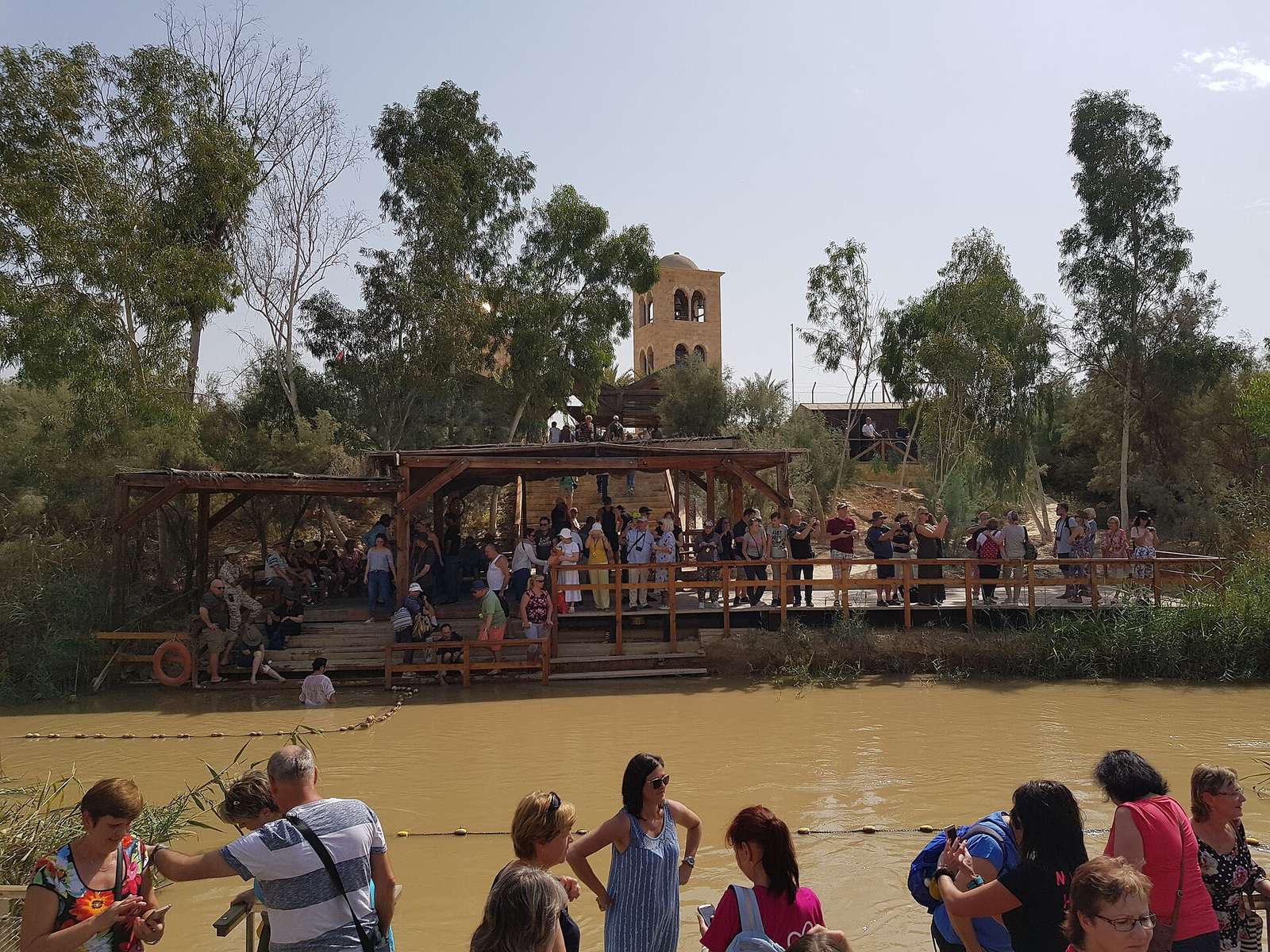
Qasr al-Yahud baptismal site on the Jordan River
STOP 3Jordan River

The Jordan — The Baptism

East of Jericho, the Jordan runs brown and narrow between reeds. Two sites face each other across it: on the Jordanian bank, Bethany Beyond the Jordan (Al-Maghtas), inscribed by UNESCO in 2015 as the baptism site with early Byzantine remains; on the west bank, Qasr al-Yahud, in the photograph, where Israeli and Palestinian-area visitors descend to the water. Both are carried by long tradition; the river has also shifted course over two thousand years. We present the two banks as the traditions present them — this is a stop where honest labelling matters more than picking a winner.

Archaeology can date the pools, churches and steps on both banks to the Byzantine centuries of pilgrimage. What happened in the water in the first century is a matter of the Gospel record and of faith, and the page says exactly that.

Why it matters: the public story starts in a river: the baptism is the hinge between Nazareth's quiet years and everything that follows on this route.
🏛️ Factual link: Baptism Site “Bethany Beyond the Jordan” (Al-Maghtas), on the Jordanian bank, is a UNESCO World Heritage listing (inscribed 2015). See the collection →

Plan this stop

Guided toursViator — Jordan River baptism site tours →Affiliate link — you pay the same
Tours tooGetYourGuide →Affiliate link — you pay the same
Stay nearbyStay22 — places to stay →Affiliate link — you pay the same
CoverSafetyWing travel insurance →Affiliate link — you pay the same
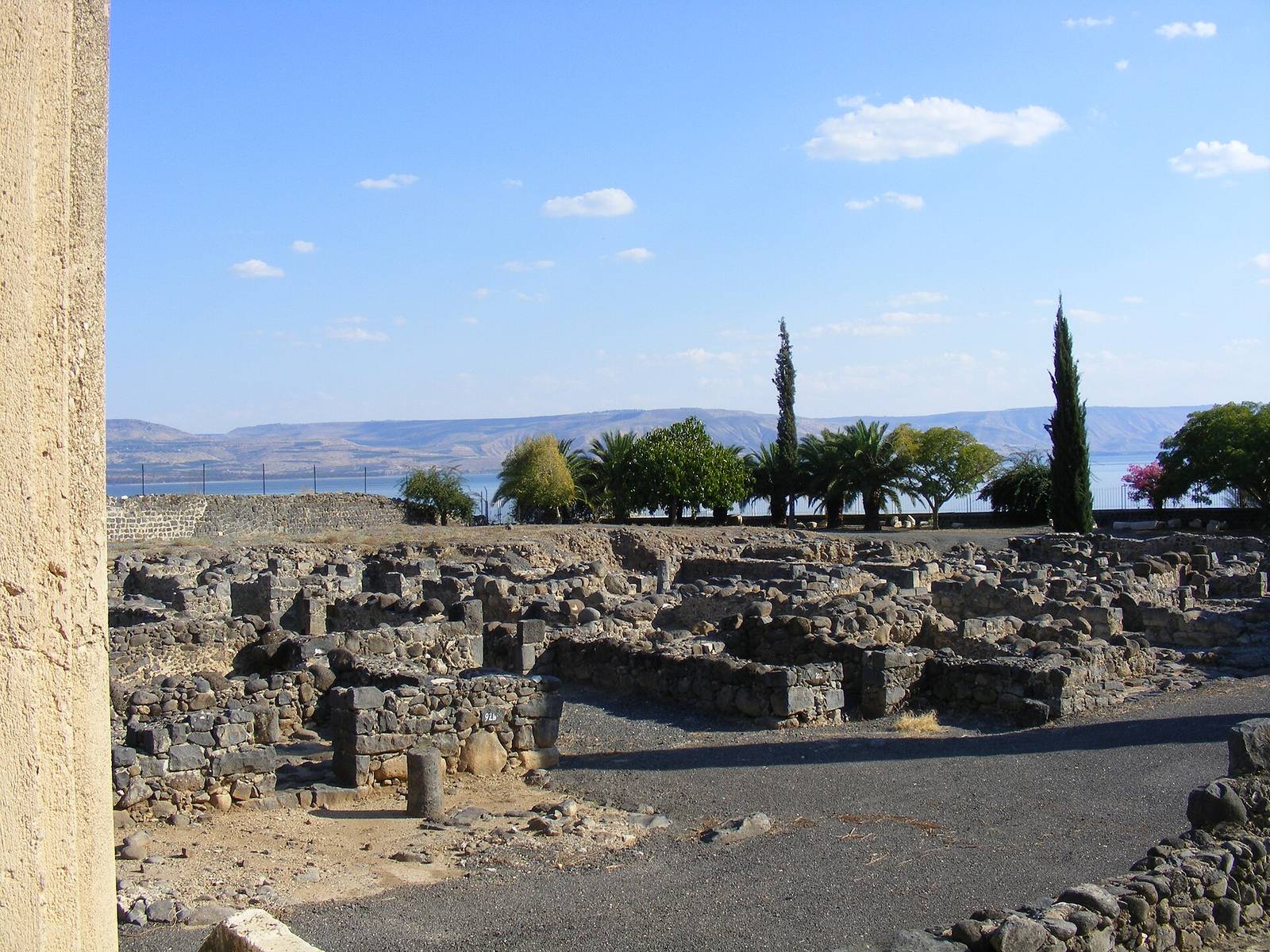
The synagogue ruins at Capernaum
STOP 4Capernaum

Capernaum — The Town of Jesus

On the north shore of the Sea of Galilee, Capernaum was the base of the Galilean ministry — “his own town”, Matthew calls it. Unlike many stops on this route, Capernaum is primarily an excavated place: the white limestone synagogue in the photograph is fourth- or fifth-century, standing over black basalt foundations that may be its first-century predecessor — “may”, labelled honestly. A few steps away, an octagonal Byzantine church preserves the site of a house venerated since the first century as Peter's; the veneration is documented early, the identification is tradition's.

The excavators here were Franciscan archaeologists who dug the town street by street; the labels in the park distinguish what was found from what is believed with unusual clarity, and this page follows their example.

Why it matters: Capernaum is the route's archaeology lesson: layers of basalt and limestone that let you watch tradition and evidence share one small town.

Plan this stop

Guided toursViator — Capernaum tours →Affiliate link — you pay the same
Tours tooGetYourGuide →Affiliate link — you pay the same
Stay nearbyStay22 — places to stay →Affiliate link — you pay the same
CoverSafetyWing travel insurance →Affiliate link — you pay the same
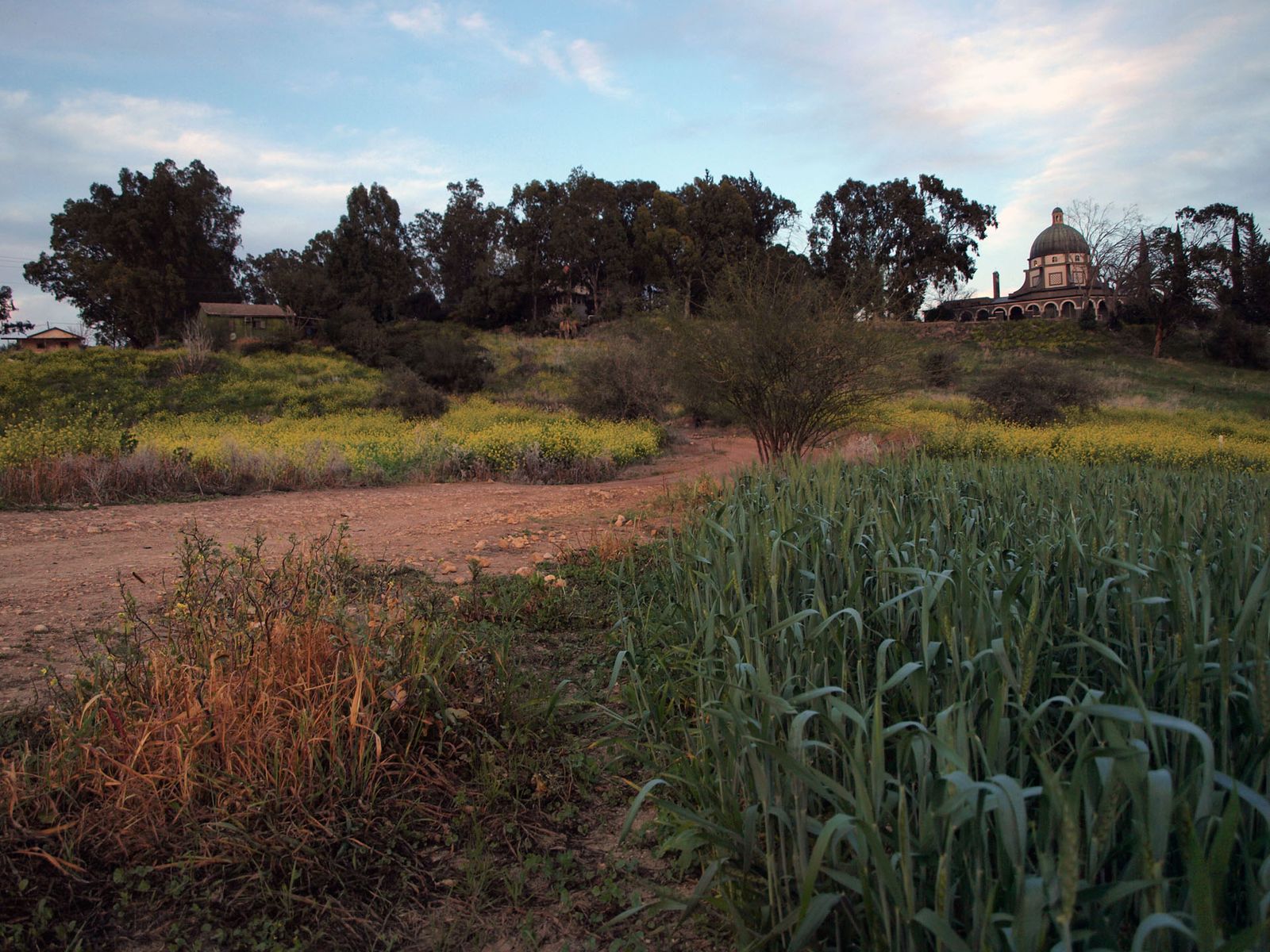
The Church of the Beatitudes above the Sea of Galilee
STOP 5Galilee

The Mount of Beatitudes — The Sermon Above the Lake

Above Capernaum's shore rises the hill where tradition places the Sermon on the Mount. The Church of the Beatitudes in the photograph, built in 1938 to a design by Antonio Barluzzi, is an octagon — one side for each Beatitude — set in gardens above the lake. The Gospels do not name the mountain; the identification is Byzantine-era tradition, held by the site's Franciscan custodians and labelled here as such. What is not tradition is the setting itself: a natural amphitheatre of hillside above the water, of exactly the kind the sermon describes its crowds sitting on.

Why it matters: the route pauses here deliberately: after birthplaces and baptism, a hill of teaching — the words, not the wonders, are this stop's whole claim.

Plan this stop

Guided toursViator — Mount of Beatitudes tours →Affiliate link — you pay the same
Tours tooGetYourGuide →Affiliate link — you pay the same
Stay nearbyStay22 — places to stay →Affiliate link — you pay the same
CoverSafetyWing travel insurance →Affiliate link — you pay the same
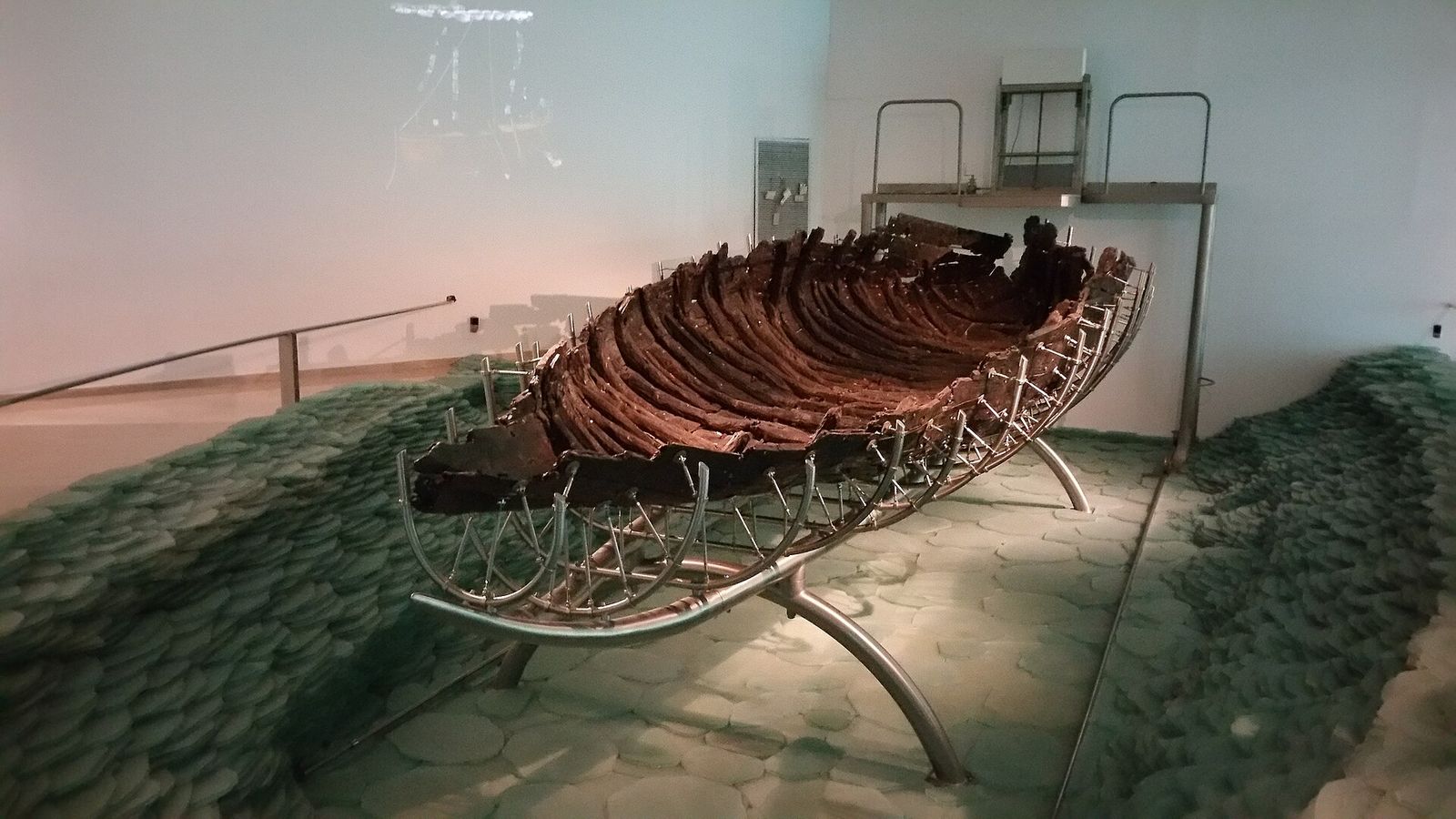
A fishing boat on the Sea of Galilee
STOP 6Galilee

The Sea of Galilee — The Working Lake

The lake itself is a stop: nineteen kilometres of freshwater where most of the Gospel's daily life happened — fishing boats, storms, shore-side crowds, breakfast on a beach. In 1986, drought levels exposed a wooden boat in the mud near Ginosar, dated by radiocarbon and pottery to the first century either side of the year zero; it is now conserved in a museum at Kibbutz Ginosar and popularly called the “Jesus boat” — a name that says more than archaeology can: it is a boat of the type and period, and this page calls it exactly that. Modern boats still work the lake, as in the photograph.

Why it matters: a whole stop for a body of water — because on this route the lake is not scenery between places; it is one of the places.

Plan this stop

Guided toursViator — Sea of Galilee boat tours →Affiliate link — you pay the same
Tours tooGetYourGuide →Affiliate link — you pay the same
Stay nearbyStay22 — places to stay →Affiliate link — you pay the same
CoverSafetyWing travel insurance →Affiliate link — you pay the same
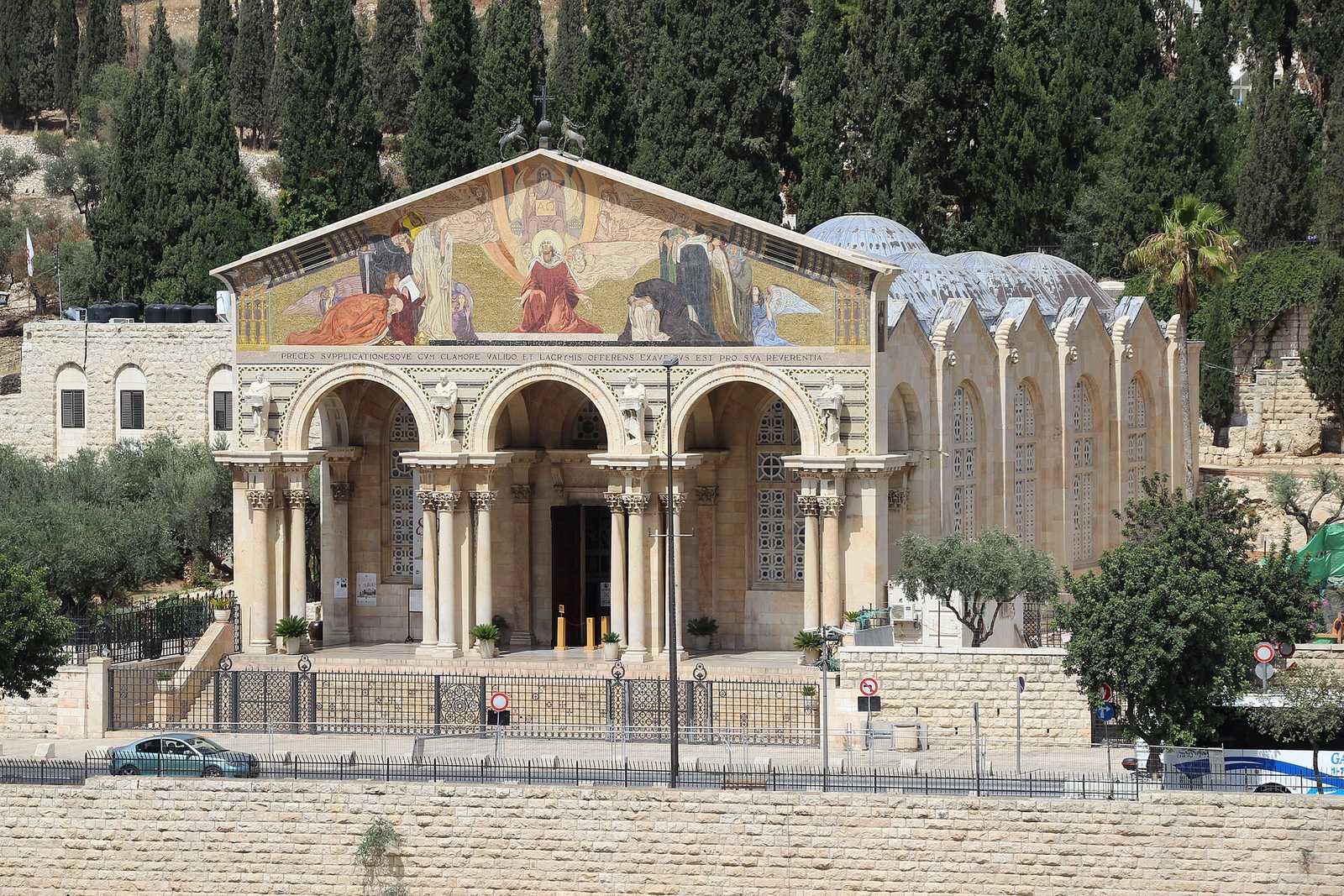
The Church of All Nations at Gethsemane, Jerusalem
STOP 7Jerusalem

Gethsemane — The Garden at Night

Across the Kidron valley from the Old City, at the foot of the Mount of Olives, stands the Church of All Nations (1924) over the rock where tradition places the Agony in the Garden — beside a grove of olive trees whose oldest specimens have been radiocarbon-dated to the medieval centuries, with roots plausibly far older. The church's dark, star-vaulted interior was designed to feel like night. Tradition identifies this garden as Gethsemane from the fourth century onward; the Mount of Olives setting is fixed by the Gospel accounts, the exact grove is tradition's — the distinction this route keeps everywhere.

Why it matters: the garden is the route's still point: between the lake's daylight ministry and the city's final week, one night of prayer under old trees.

Plan this stop

Guided toursViator — Gethsemane Mount of Olives tours →Affiliate link — you pay the same
Tours tooGetYourGuide →Affiliate link — you pay the same
Stay nearbyStay22 — places to stay →Affiliate link — you pay the same
CoverSafetyWing travel insurance →Affiliate link — you pay the same
The Church of the Holy Sepulchre, Jerusalem
STOP 8Jerusalem

The Holy Sepulchre — The Empty Tomb Tradition

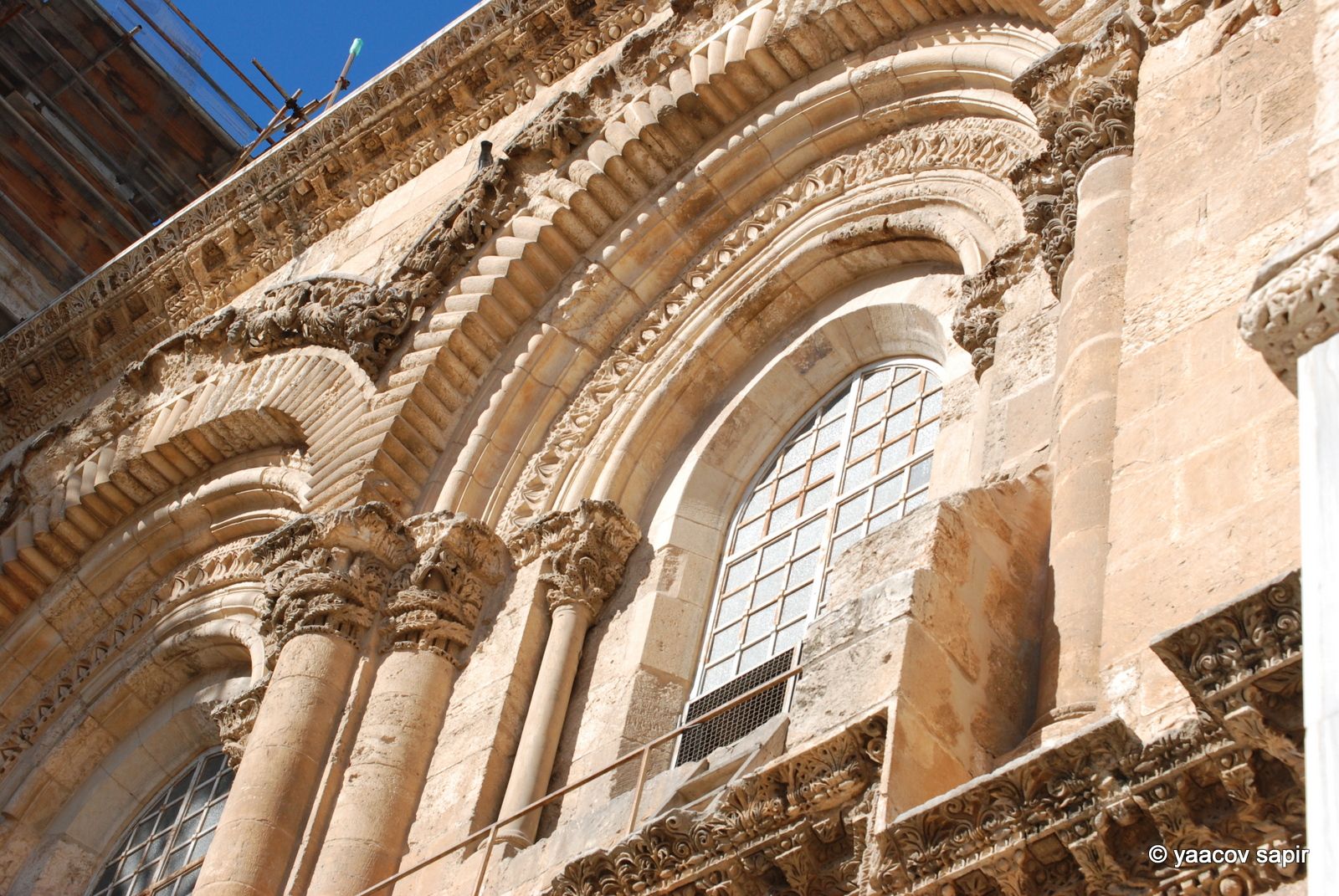
The Church of the Holy Sepulchre holds, under one roof, the two sites at the centre of Christian faith: Golgotha and the tomb. The first church here was consecrated in 335, after Constantine's mother Helena's pilgrimage; the identification of this ground as the crucifixion and burial place rests on unbroken local tradition from the decades after the events — the strongest tradition-claim on this route, and still, in the language of archaeology, a tradition: the church stands inside today's walls on ground that in the first century lay outside the city wall, near an ancient quarry, which fits the Gospel conditions. Crusader rebuilding gave the church its present form; six Christian communities share it under the Status Quo, and the famous immovable ladder still leans on its façade.

The Via Dolorosa that leads here is a pilgrim route shaped in the medieval and Franciscan centuries; walking it is a devotional practice with its own long history, distinct from a claim about the exact street path of the first century. Both things are honoured on this page by being told apart.

Why it matters: everything on this route converges under this roof: the birth's promise and the baptism's beginning end at an empty tomb — the claim on which the whole story turns.
🏛️ Factual link: this church stands inside the Old City of Jerusalem and its Walls, a UNESCO World Heritage listing (inscribed 1981). See the collection → · Jerusalem's arrest chapter in Paul's life is told on our Paul route.

Plan this stop

Guided toursViator — Holy Sepulchre Old City tours →Affiliate link — you pay the same
Tours tooGetYourGuide →Affiliate link — you pay the same
Stay nearbyStay22 — places to stay →Affiliate link — you pay the same
CoverSafetyWing travel insurance →Affiliate link — you pay the same
The Garden Tomb, Jerusalem
STOP 9Jerusalem

The Garden Tomb — The Other Witness

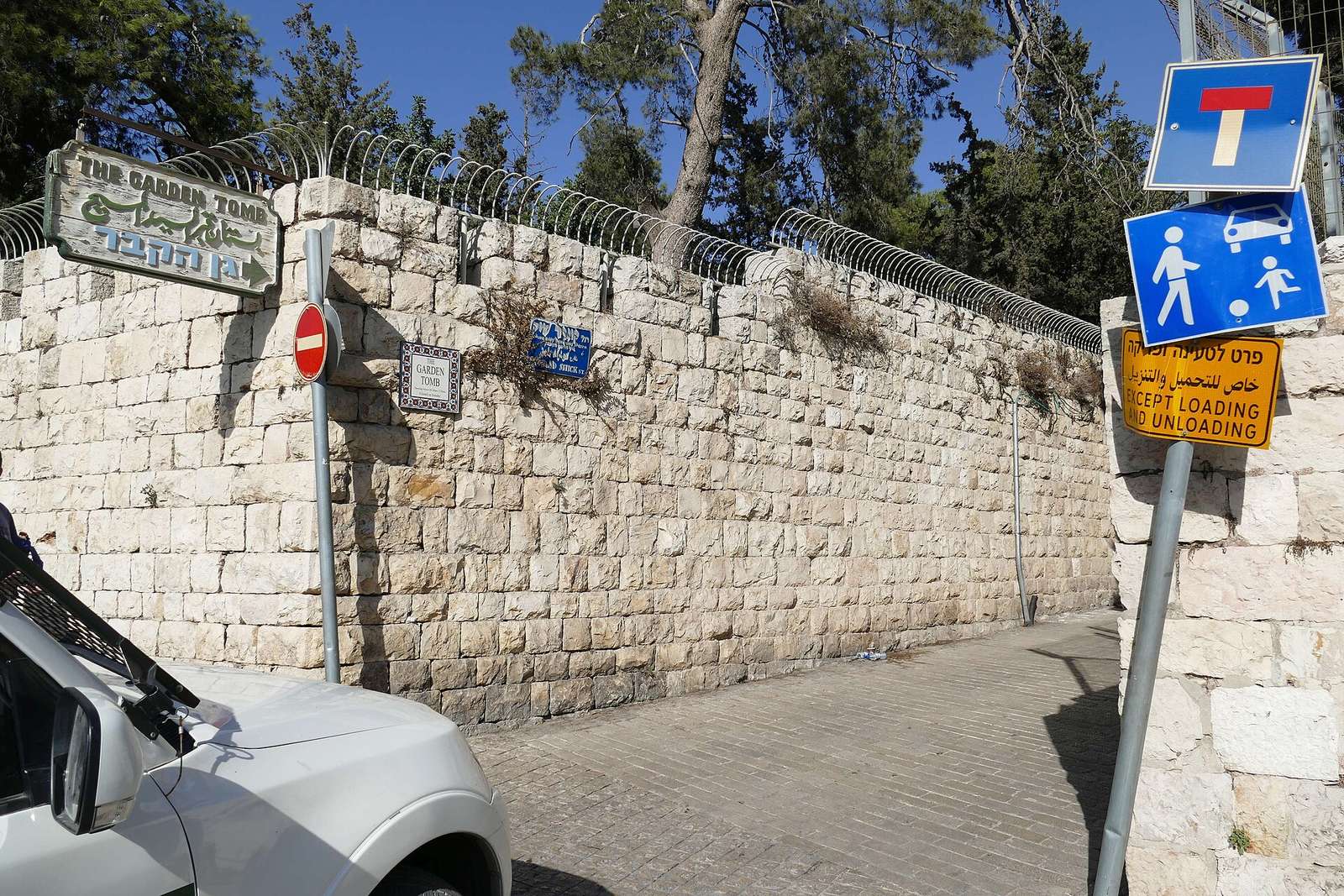
North of the Damascus Gate, a quiet garden holds a rock-cut tomb that many visitors — especially from Protestant traditions — find the most evocative in Jerusalem. The Garden Tomb was proposed in the nineteenth century (most famously by General Charles Gordon in 1883) as an alternative site of the crucifixion and burial, near a rocky escarpment read as “the place of the skull”. Archaeologists date the tomb itself to the Iron Age, centuries before Jesus — a fact the garden's own literature acknowledges while keeping the setting's devotional power. We end the route here on purpose: two traditions, side by side, neither mocked and neither inflated — the garden kept, as its keepers ask, as a place to consider the resurrection rather than to settle an argument.

Why it matters: the route's final stop is a lesson in its own method: hold the evidence honestly, hold the devotion gently, and let the visitor stand in the garden and decide what the quiet means.

Plan this stop

Guided toursViator — Garden Tomb Jerusalem tours →Affiliate link — you pay the same
Tours tooGetYourGuide →Affiliate link — you pay the same
Stay nearbyStay22 — places to stay →Affiliate link — you pay the same
CoverSafetyWing travel insurance →Affiliate link — you pay the same
Route complete? Nine stamps, one life — and a method worth keeping: tradition and evidence, told apart, on the same page. Paul's arrest in this same city is Stop 13 of the Paul route. Before planning any real journey here, re-check the safety picture on our Travel Safety page — advisories change, and this page's box is a snapshot dated in its first line. Back to the Pilgrimage Routes hub · UNESCO World Heritage collection
Photo credits: Basilica of the Annunciation, Nazareth by Hoshvilim, CC BY-SA 4.0 · Church of the Nativity, Bethlehem by Bahnfrend, CC BY-SA 4.0 · Qasr al-Yahud, Jordan River by Jakub CA, CC BY 4.0 · Capernaum synagogue ruins by zeevveez, CC BY 2.0 · Church of the Beatitudes by CC0 · The 1st-century Galilee Boat, Ginosar museum by Konrad Summers from Santa, CC BY-SA 2.0 · Church of All Nations, Gethsemane by Gary Todd from Xinzheng,, CC0 · Church of the Holy Sepulchre, Jerusalem by Hoshvilim, CC BY-SA 4.0 · The Garden Tomb, Jerusalem by Bukvoed, CC BY 4.0 — all via Wikimedia Commons.