Germany, in the order he lived it — born in Eisleben in 1483, dead in Eisleben in 1546, and everything in between: the monastery, the 95 Theses, the emperor, the hidden castle, and the translation that changed a language.
How this route works. The stops are in life order, not driving order — this is a biography you walk, not an optimised itinerary, and we do not promise distances or travel times between stops. Opening hours and admission change; check each site's official pages before you go. Two stops happen to be UNESCO World Heritage sites — where that is a fact, we say so and link to our World Heritage collection. This pilgrimage section is its own thing: a stop does not need a UNESCO listing to belong here.
Your pilgrim stamps — 0 of 11 stops
Stamps live only on this device (browser local storage, key pilgrimage_stamps_v1) — never sent to a server, and they work offline. Clearing your browser data clears them; there is no account to recover them from. A stamp is your own honest record, nothing more.
STOP 11483
Eisleben — Where the Life Begins
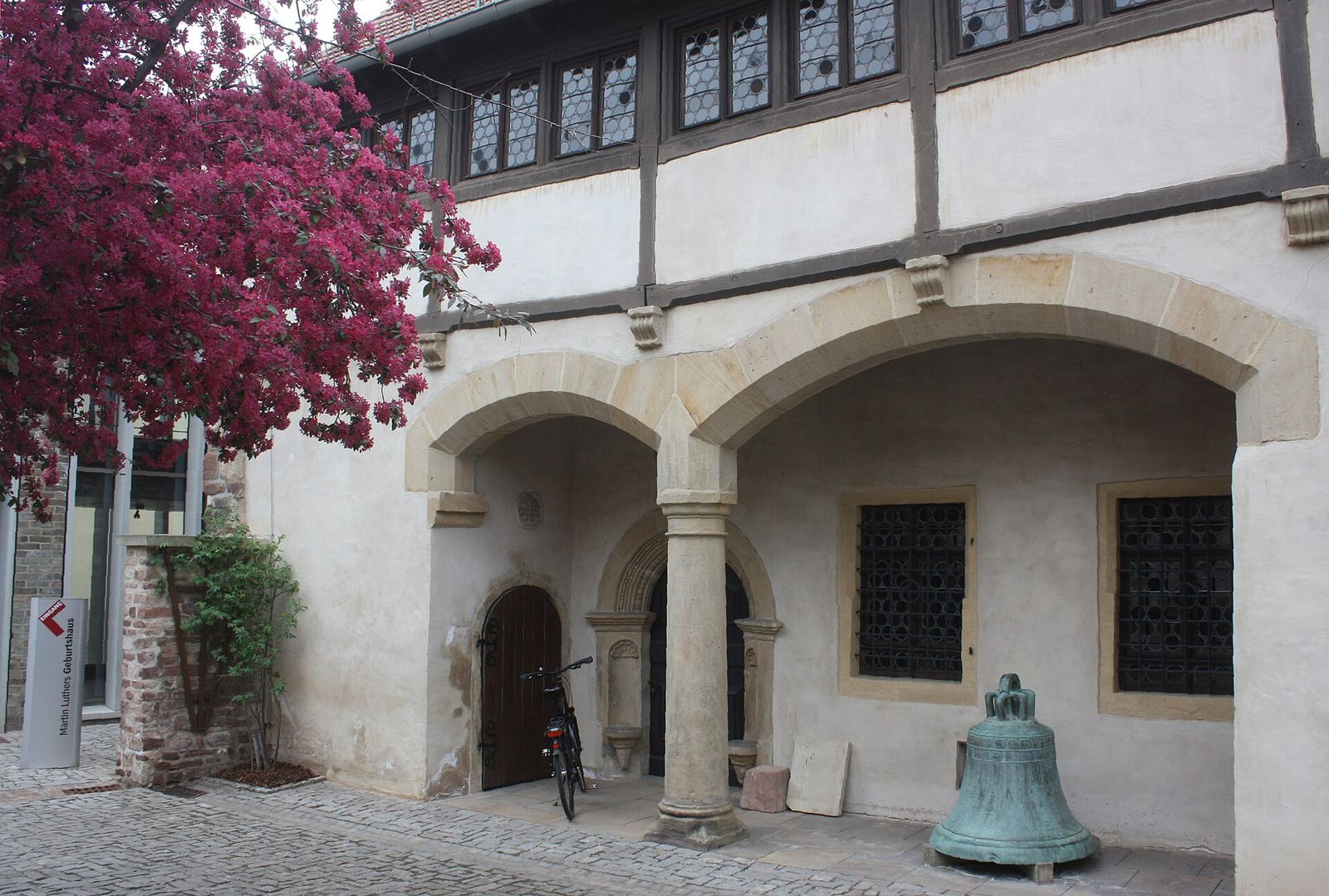
Martin Luther was born in Eisleben on 10 November 1483, the son of Hans and Margarethe Luther, who had come to this copper-mining region to make a living. The house remembered as his birthplace is now a museum about his family and the world he was born into.
Why it matters: the route starts and ends in this one small town. Everything between this stop and Stop 11 is the distance a miner's son travelled without ever leaving his century behind.
🏛️ Factual link: the Birth House is part of the UNESCO World Heritage listing Luther Memorials in Eisleben and Wittenberg (inscribed 1996). See it in the collection →
STOP 2c. 1484 – 1497
Mansfeld — The Miner's Son
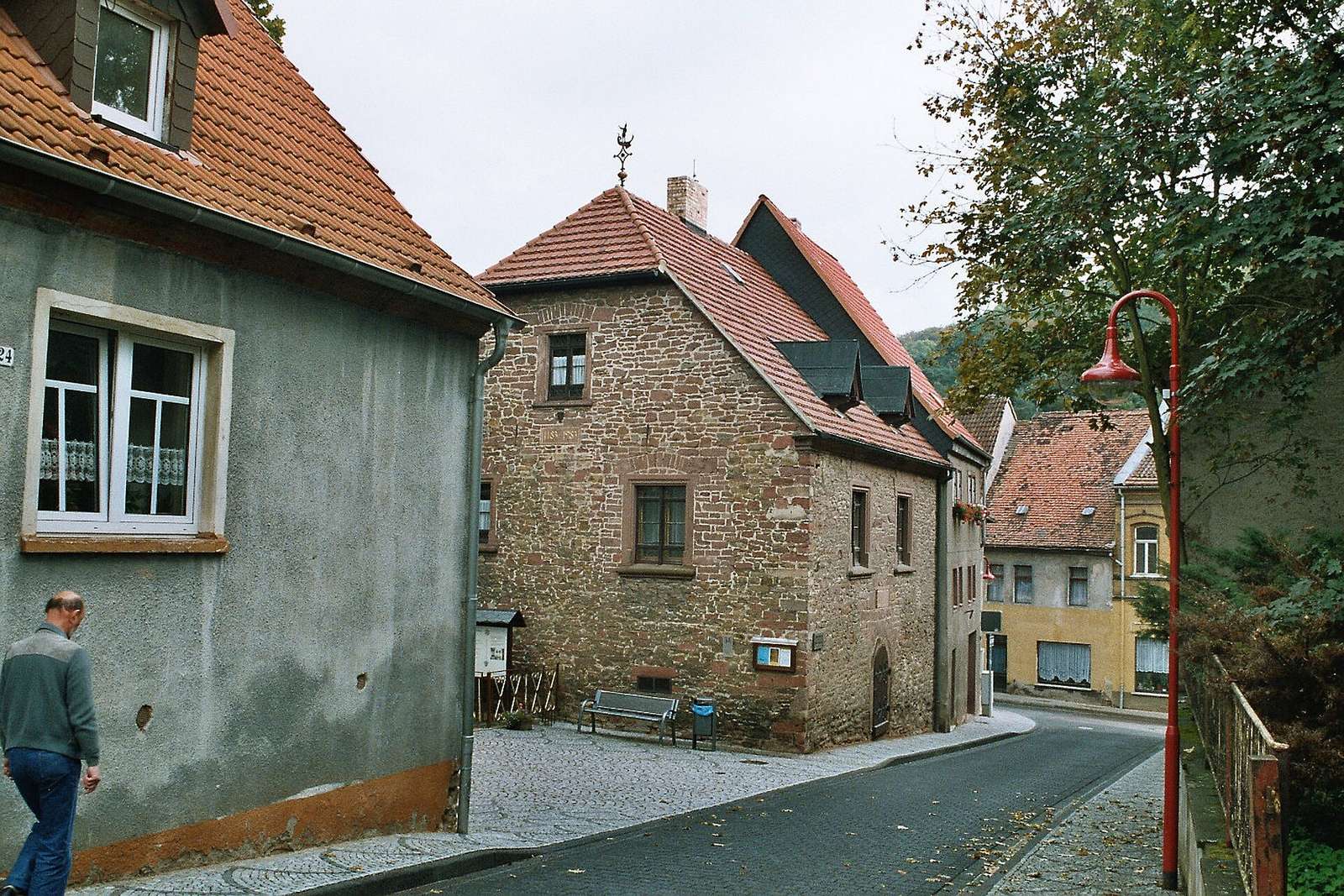
Within a year of Martin's birth the family moved to nearby Mansfeld. Hans Luther worked his way up in copper mining and smelting until he leased mines and furnaces of his own and sat on the town council. Young Martin went to the town's Latin school — a strict, ambitious household, and a father determined his son would rise further, into the law.
Why it matters: Luther's later drive, discipline and bluntness were formed here, in a mining town, long before Wittenberg. His parents' house is preserved by the Luther Memorials Foundation (it is a foundation museum — it is not part of the UNESCO listing, and we won't pretend otherwise).
STOP 31497 – 1498
Magdeburg — A Year Away at School
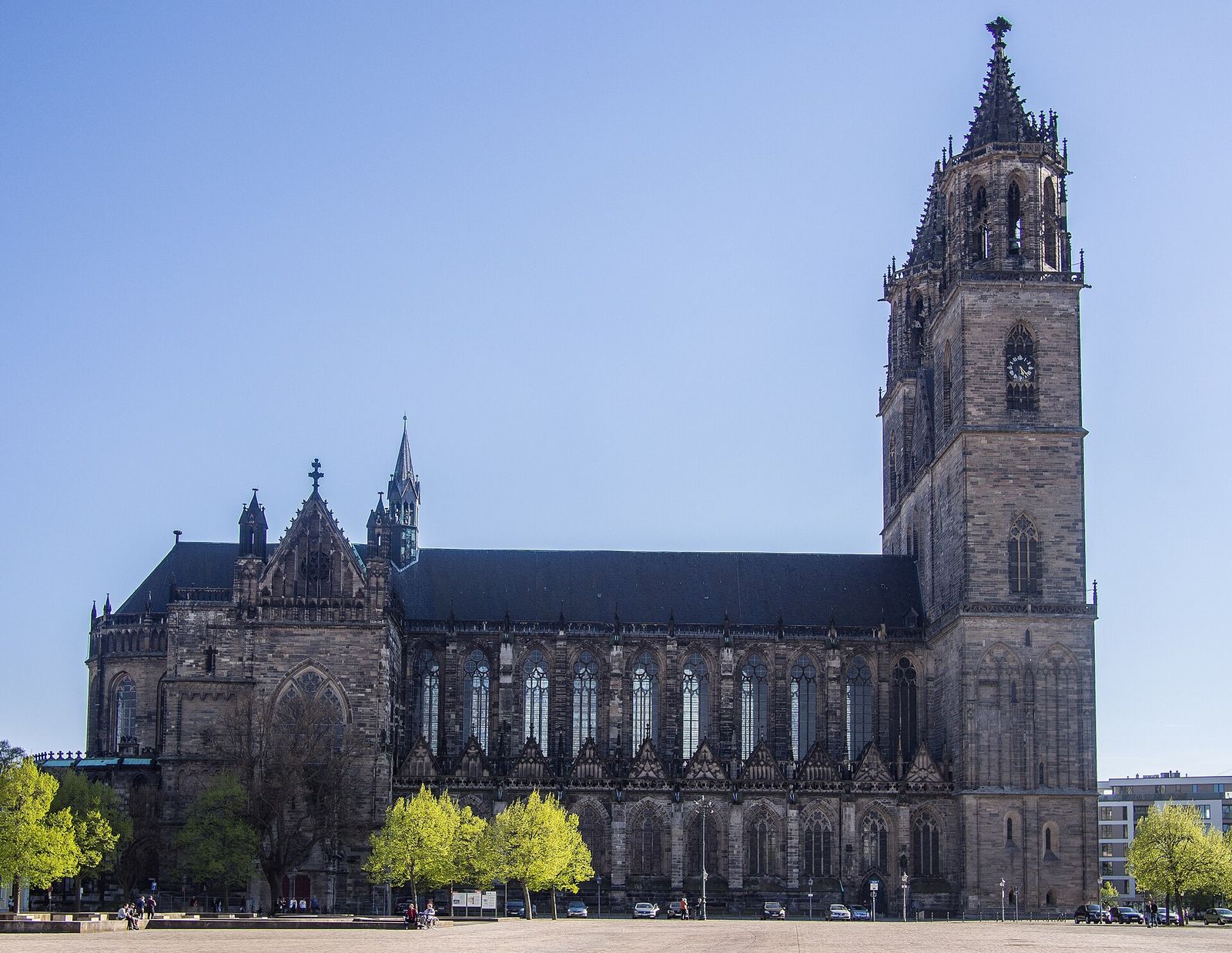
At about fourteen, Martin was sent to Magdeburg for roughly a year of further schooling, in the orbit of the devout Brethren of the Common Life. It was his first long stretch away from home. The photograph shows Magdeburg Cathedral, the landmark of the city as he would have known it — his school itself is not a surviving Luther site, and this stop is about the city, honestly labelled.
Why it matters: a short stop, but the route keeps it because a life is made of short stops too. One year here, then on to Eisenach.
STOP 41498 – 1501
Eisenach — School Years at St George's
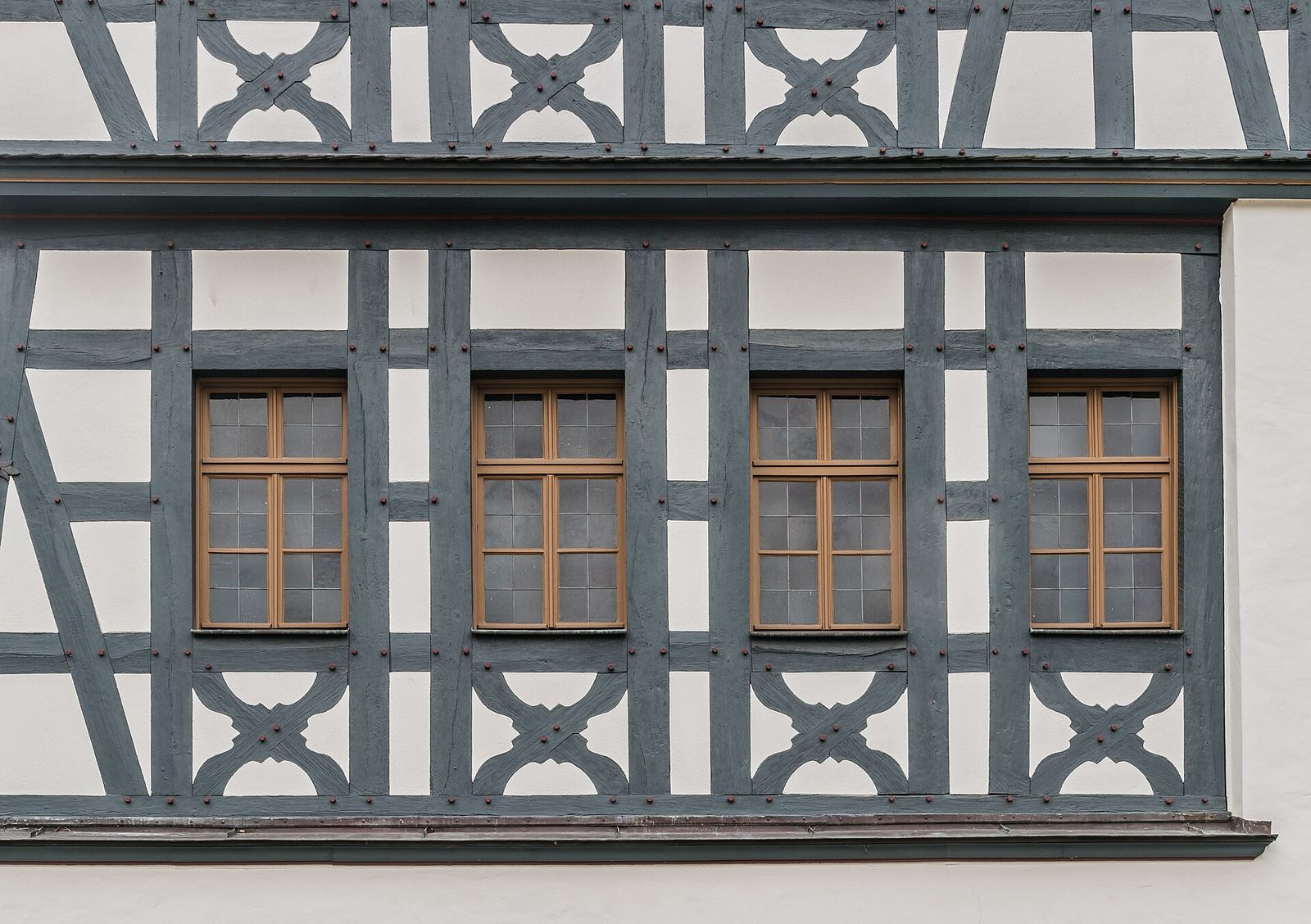
From 1498 to 1501 Luther studied at the parish school of St George in Eisenach, living as a poor scholar and singing for his keep, as schoolboys of the time did. By his own later account these were comparatively happy years. The house in the photograph is Eisenach's Lutherhaus, traditionally associated with the family who sheltered the schoolboy — treat that association as tradition, which is how the town itself presents it.
Why it matters: Eisenach bookends Luther's youth and his most famous hiding place — the Wartburg above this town is Stop 9. You will come back here, as he did, in very different circumstances.
STOP 51501 – 1511
Erfurt — The Vow and the Monastery
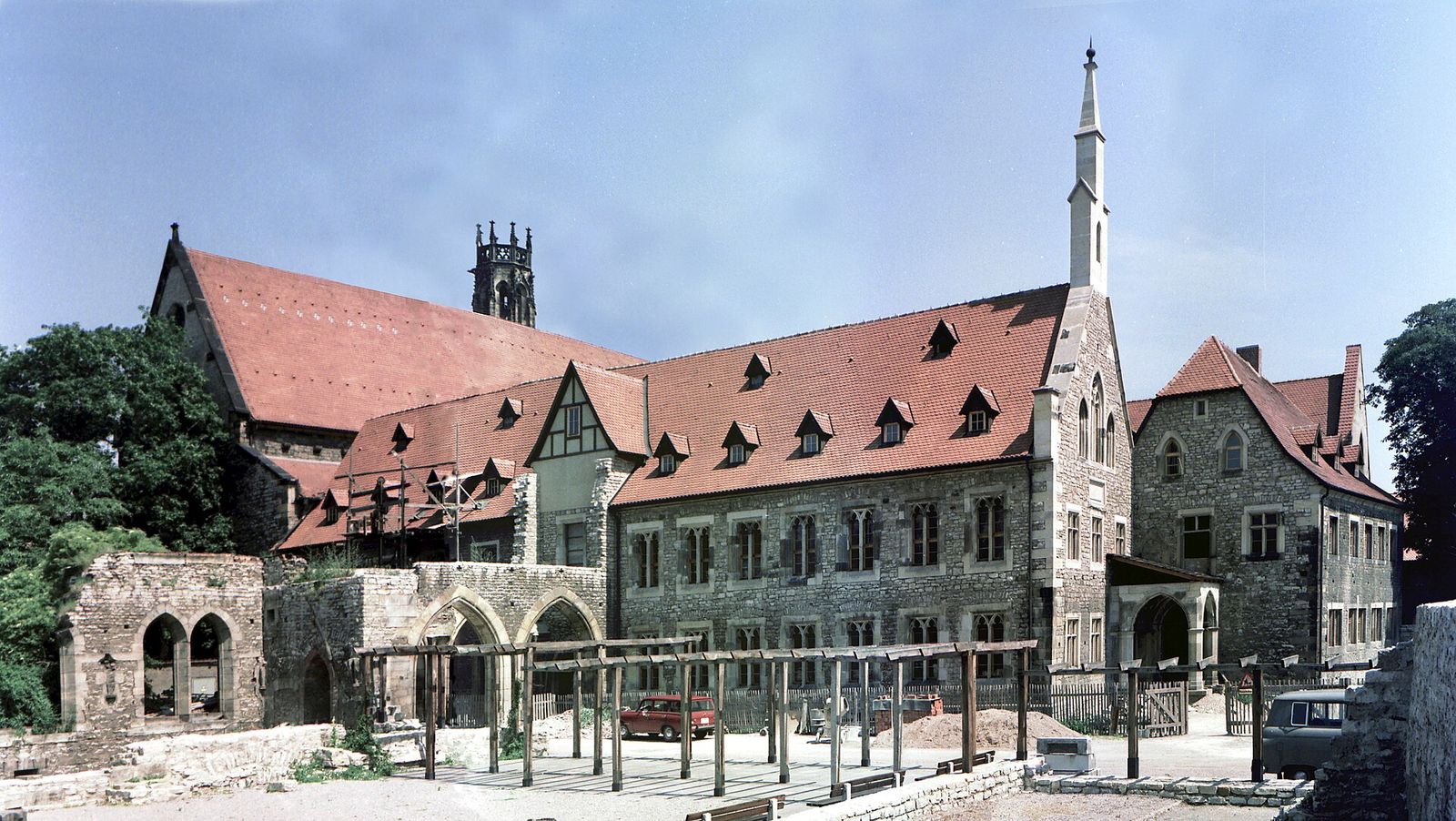
Luther entered the University of Erfurt in 1501, took his master's degree in 1505, and began the law studies his father wanted. Then, on 2 July 1505, caught in a thunderstorm near the village of Stotternheim on the way back to university, he cried out a vow to St Anne — as Luther himself later told it — that he would become a monk if he lived. Fifteen days later, on 17 July 1505, he entered Erfurt's Augustinian monastery, the Augustinerkloster. He took his vows in 1506 and was ordained a priest in 1507. The monastery church and cloister still stand.
Why it matters: this is the hinge of the whole life. The questions that would become the Reformation — how a person stands right before God — were first wrestled with inside these walls, in confession, prayer and study.
STOP 61511 – 1546
Wittenberg — Professor, Theses, Home
Luther had first stayed in Wittenberg in 1508; in 1511 he settled there for good. He became a doctor of theology in October 1512 and professor of Bible at the young university, preached in the town church, and lived in the Augustinian monastery that later became the Lutherhaus — first as a monk, then, after his marriage to Katharina von Bora on 13 June 1525, as the head of a famously busy household.
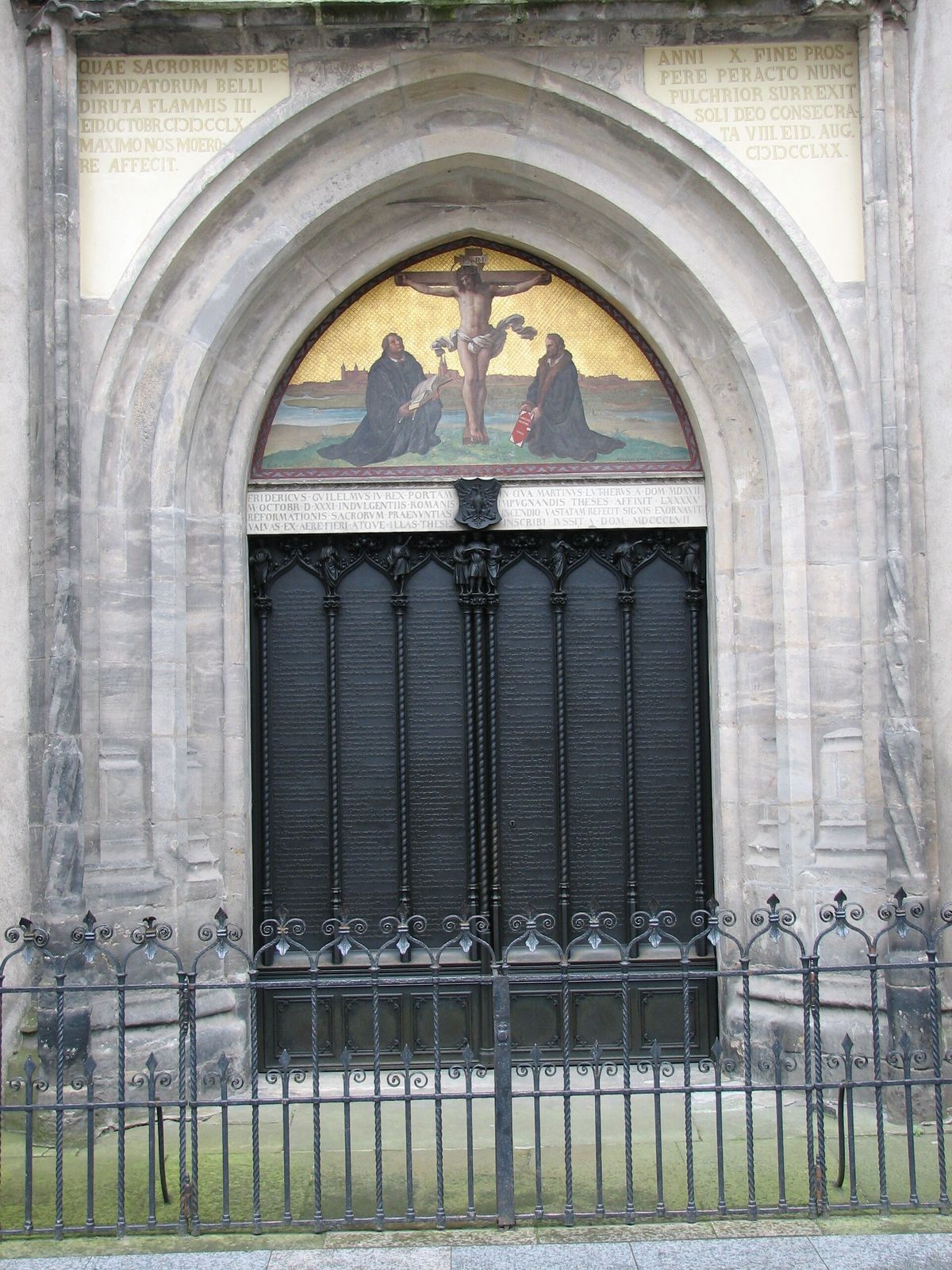
On 31 October 1517 he sent his 95 Theses — a scholar's challenge to the selling of indulgences — to the Archbishop of Mainz; that letter is documented. Tradition remembers him also posting them on the door of the Castle Church in the photograph, and UNESCO's own description of the site says plainly that this is "the castle church where Luther posted his famous '95 Theses'". Historians still debate the door-posting itself; the theses, and what they started, are not in doubt. Luther died on a journey in 1546 and was brought home to Wittenberg, where he is buried in the Castle Church.
Why it matters: if the route has a centre of gravity, it is here — the classroom, pulpit and kitchen table from which a local dispute became a movement that reshaped Europe's religious and political map.
🏛️ Factual link: Wittenberg's Lutherhaus, Melanchthon House, Town Church and Castle Church are part of the UNESCO listing Luther Memorials in Eisleben and Wittenberg (1996, criteria iv and vi). See it in the collection →
STOP 71518
Augsburg — Three Days with Cajetan
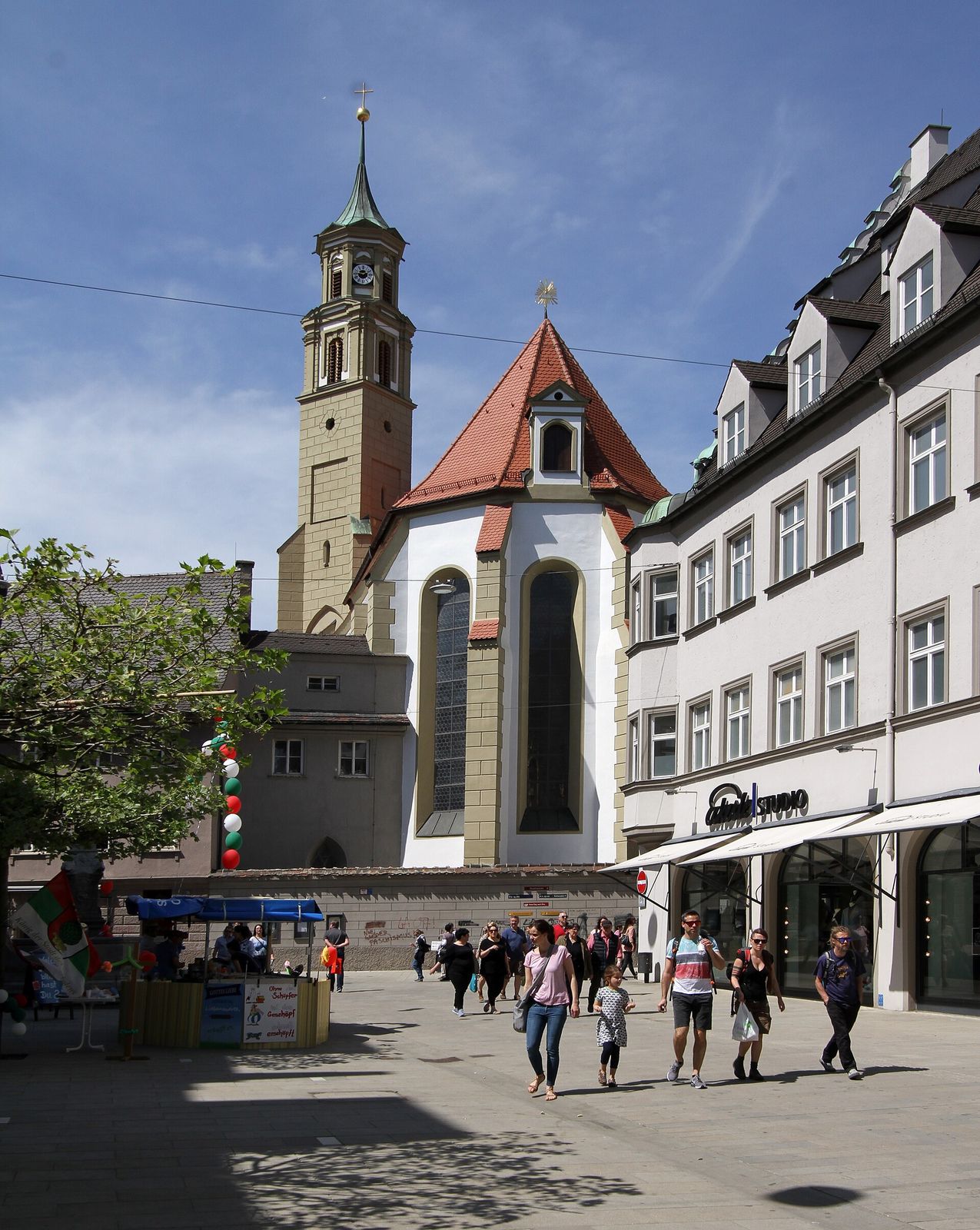
A year after the theses, Luther was summoned to answer for his teaching at Augsburg, where the papal legate Cardinal Cajetan questioned him over three days, 12–14 October 1518, and demanded he recant. Luther refused, argued his case from Scripture, and — hearing that arrest was being planned — slipped out of the city by night about a week later, on horseback. The photograph shows St Anna's, the church where Luther lodged with the Carmelites during that tense stay.
Why it matters: Augsburg 1518 was the moment negotiation failed. After this, the path ran only one way: toward Worms, and toward a break that neither side yet fully intended.
STOP 81521
Worms — Before the Emperor
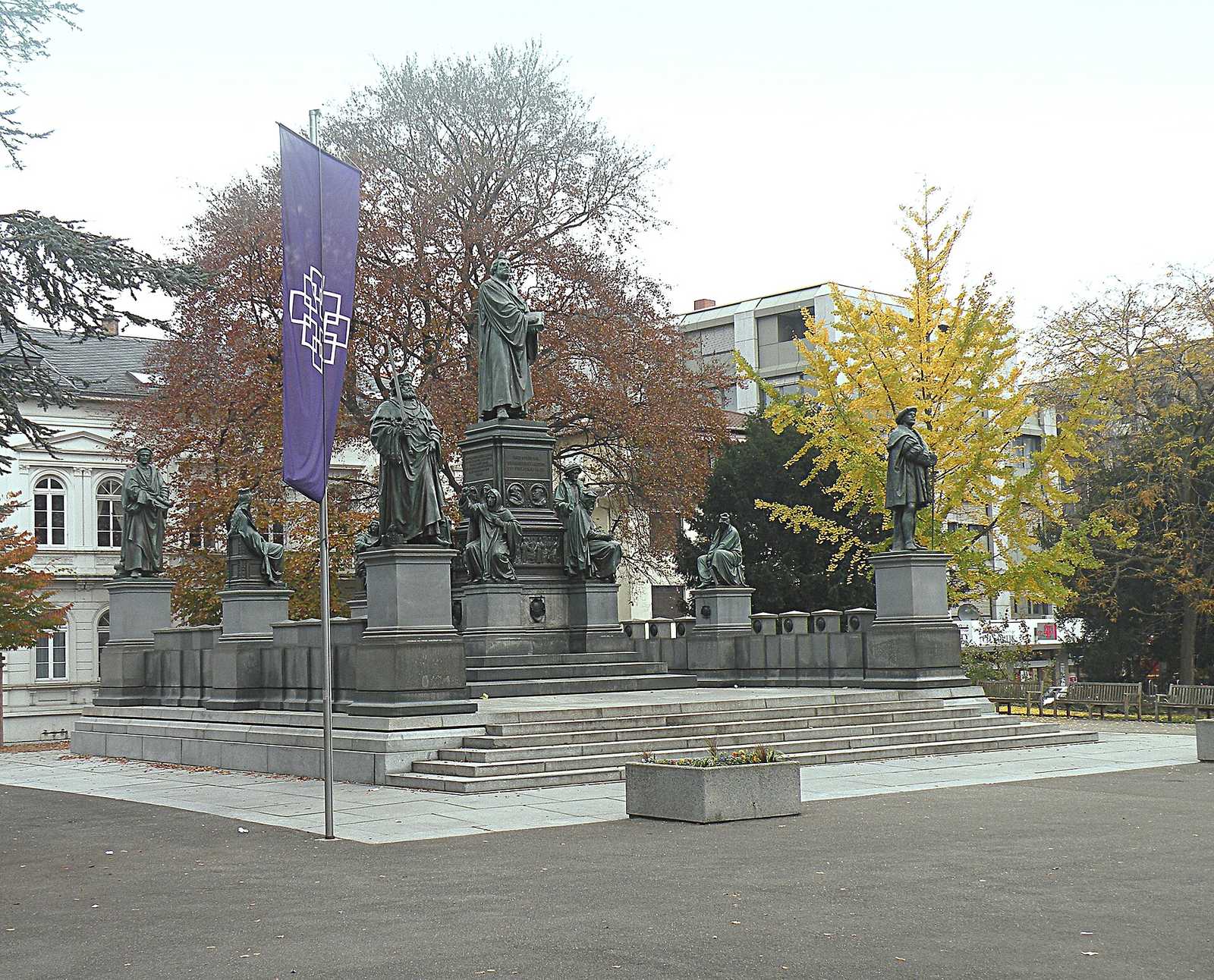
Excommunicated by the pope in January 1521, Luther was summoned under a promise of safe conduct to the imperial Diet at Worms. On 17 April 1521, facing a table stacked with his books, he was asked whether they were his and whether he would take them back. He asked for a day to think. On 18 April he answered that he could not recant — his conscience was bound by the words of Scripture he had cited. Later generations compressed the answer into the famous words "Here I stand"; what is documented is the refusal itself. In May 1521 the Edict of Worms declared him an outlaw whose writings were banned and whom anyone could seize. The great Luther Memorial in the photograph was raised here in the 19th century.
Why it matters: a lone monk-professor, under safe conduct, told the assembled powers of the empire no — and the safe conduct held just long enough for his protector to hide him (Stop 9).
STOP 91521 – 1522
The Wartburg — Junker Jörg and the September Testament
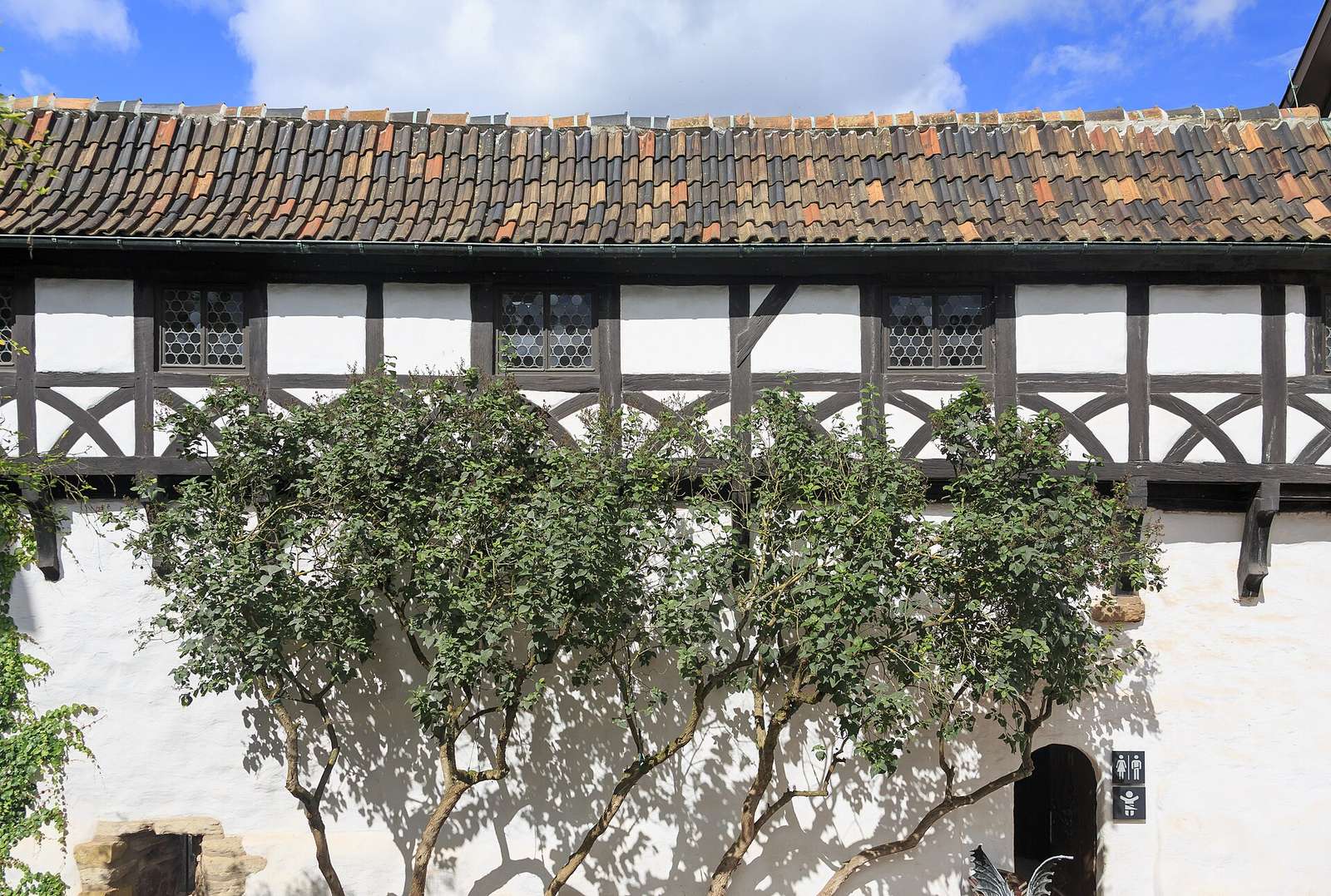
On the road home from Worms, on 4 May 1521, horsemen sent by Elector Frederick the Wise staged a kidnapping and carried Luther to the Wartburg, the castle above Eisenach — back to the town of his school years, this time in disguise. For about ten months he lived as "Junker Jörg", a bearded knight, and in that hiding he did the most consequential desk work of his life: translating the New Testament from Greek into German in roughly ten to eleven weeks. Published in September 1522 as the September Testament, it put the New Testament into the language of ordinary readers — his was not the first German translation, but it became by far the best known, and it shaped the German language itself.
Why it matters: hiding for his life, Luther produced the book that carried his ideas further than any sermon could. The small room where he worked — the Lutherstube — is still shown in the castle.
🏛️ Factual link: Wartburg Castle is itself a UNESCO World Heritage site (inscribed 1999, criteria iii and vi), recognised in part for Luther's exile and translation here. See it in the collection →
STOP 101530
Coburg — The Fortress Behind the Confession
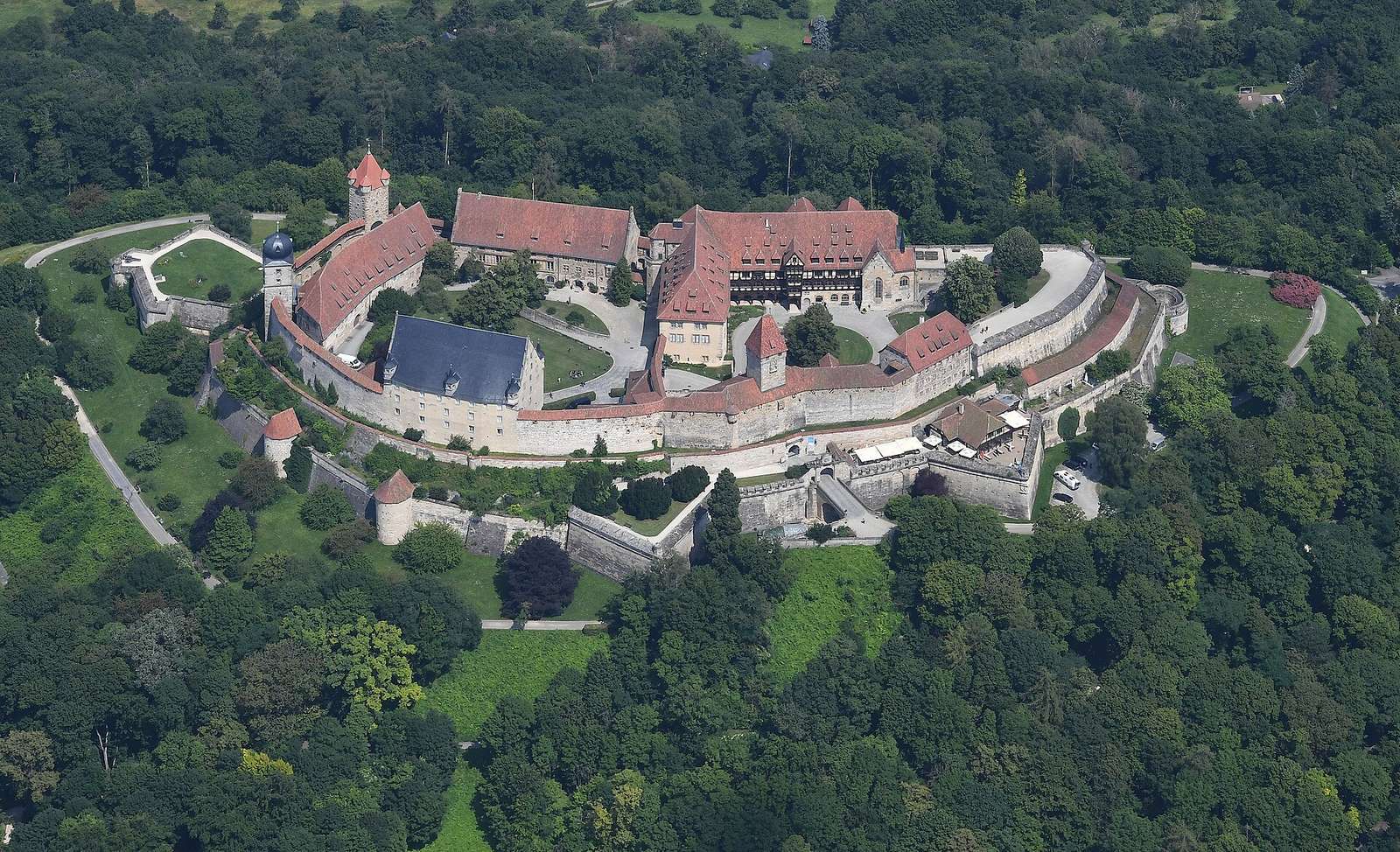
In 1530 the emperor called another Diet, at Augsburg, to settle the religious division. Luther was still legally an outlaw and could not safely go. So from 24 April to 4 October 1530 he waited at Coburg Fortress, on the southern edge of his elector's territory — the closest he could get — reading drafts and advising his colleagues by a stream of letters. In Augsburg itself, Philipp Melanchthon did the drafting, and on 25 June 1530 the Augsburg Confession was presented to Charles V. In the Lutheran tradition it remains a foundational statement of faith.
Read the map right: this stop is Coburg, not Augsburg. Luther was not in Augsburg in 1530 — that is exactly the point of the fortress. (His Augsburg stop on this route is 1518, Stop 7.)
Why it matters: the movement had outgrown one man's presence. At Coburg you see the Reformation becoming institutions, documents and churches that no longer depended on Luther being in the room.
STOP 111546
Eisleben — The Life Closes Where It Began
In January 1546, ill and sixty-two, Luther travelled back to the town where he was born to mediate a dispute between the counts of Mansfeld — the mining country his father had made his fortune in. He settled the dispute, preached his last sermons, and died in Eisleben on 18 February 1546. His body was carried to Wittenberg and buried in the Castle Church, beneath the door of Stop 6.
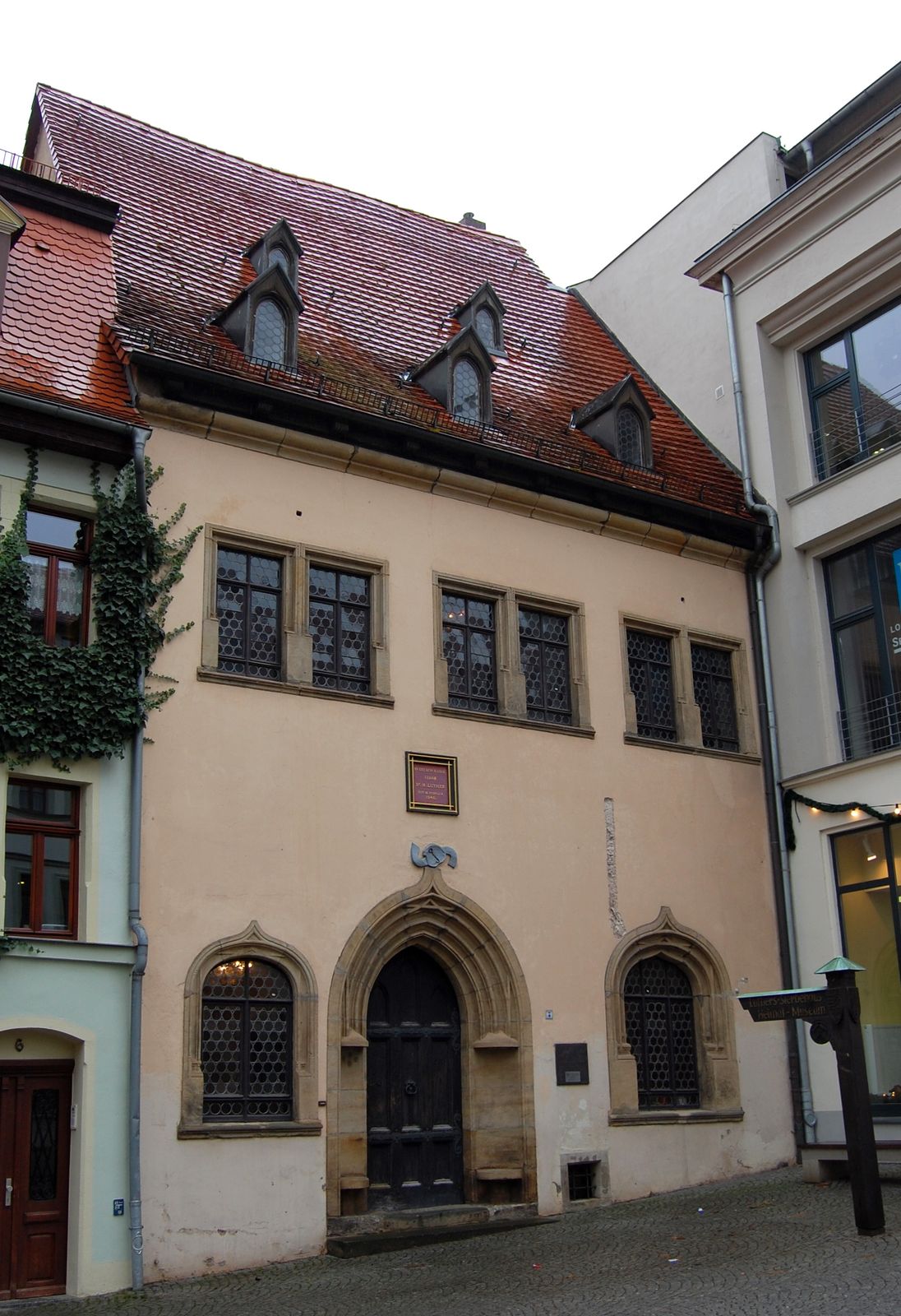
One honest label: the museum in the photograph is traditionally called Luther's Death House, and it is part of the UNESCO listing — but the Luther Memorials Foundation's own research says the identification rests on a mix-up from 1726 between two houses of the same owner. The house where Luther actually died stood on the market square and was demolished in the 1570s. Visit this museum as what it truly is: a memorial kept with care since that mistake, telling the story of his final days — not the literal room where he died.
Why it matters: the route closes its own circle — birth house and death house in the same small town, sixty-two years apart. A life that argued with popes and emperors ended doing local peacemaking among miners' counts.
🏛️ Factual link: the Death House museum is component 783-002 of the UNESCO listing Luther Memorials in Eisleben and Wittenberg (1996). See it in the collection →
Route complete? When all eleven stamps are filled, you have walked the whole arc of one life. If you are also collecting World Heritage sites, two of these stops carry stamps there too — the same visits count in both collections, because they are the same real places. Back to the Pilgrimage Routes hub · UNESCO World Heritage collection · Our Germany guide